Releases and Timelines in SAP Cloud ALM
In today’s fast-paced digital landscape, SAP implementations and enhancements must be delivered in a controlled, transparent, and predictable manner. Without structured release management, projects can quickly face scope creep, missed deadlines, and quality issues. This is where Releases and Timelines in SAP Cloud ALM play a critical role.
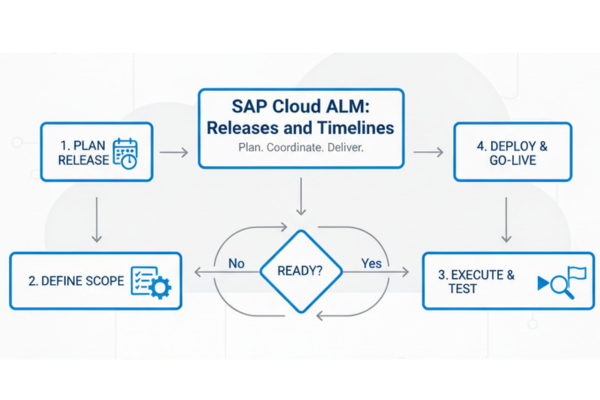
SAP Cloud ALM provides a centralized framework to define, manage, and monitor releases and their associated timelines. By aligning requirements, features, test plans, and transports within structured release cycles, organizations gain full visibility and governance over their SAP implementation journey.
What Are Releases in SAP Cloud ALM?
A Release in SAP Cloud ALM represents a defined delivery cycle within a project. It acts as a container that groups together related project elements such as:
- Requirements
- User Stories
- Features
- Tasks
- Test Plans
- Transports
Releases can represent different project structures depending on your methodology, including:
- Agile sprints
- Implementation phases (Explore, Realize, Deploy)
- Quarterly enhancements
- Major go-live milestones
- Continuous improvement cycles
By clearly defining releases, project teams ensure that scope is structured, measurable, and aligned with business objectives.
Understanding Timelines in SAP Cloud ALM
While releases define what will be delivered, Timelines define when it will be delivered. Timelines allow project managers to set:
- Start and end dates
- Milestones
- Phase durations
- Planned deployment windows
This structured scheduling helps teams monitor progress and proactively address delays. Visual timeline tracking also provides leadership with clear insight into overall project health.
Key Benefits of Using Releases and Timelines
1. Improved Scope Control
Assigning requirements and user stories to specific releases prevents uncontrolled changes and scope creep.
2. Better Project Transparency
Dashboards and progress tracking provide real-time visibility into release completion and milestone adherence.
3. Stronger Governance
Structured release cycles ensure testing, transport management, and approvals are aligned before deployment.
4. Agile and Hybrid Methodology Support
Whether your organization follows Agile, Activate, or hybrid methodologies, SAP Cloud ALM supports structured release planning.
5. Risk Reduction
Early visibility into delays or bottlenecks helps mitigate risks before they impact go-live.
Integration with Test and Transport Management
Releases in SAP Cloud ALM are not standalone planning objects. They integrate seamlessly with:
- Test Preparation and Test Execution
- Defect Management
- Transport Management
- Requirement Traceability
This end-to-end integration ensures that every release is fully validated, tested, and technically prepared before moving to production.
Best Practices for Effective Release Management
- Define releases at the beginning of the project
- Clearly assign scope to avoid overlaps
- Align testing cycles with release milestones
- Monitor dashboards regularly
- Conduct release readiness reviews before deployment
- Use milestone tracking to manage executive reporting
A structured release governance model significantly improves delivery predictability.
Why Releases and Timelines Matter for SAP Implementations
In complex SAP projects, multiple teams work simultaneously across functional, technical, and integration areas. Without a centralized release and timeline structure, coordination becomes difficult and risks increase.
By leveraging Releases and Timelines in SAP Cloud ALM, organizations gain:
- Clear accountability
- Predictable delivery cycles
- Enhanced collaboration
- Stronger project governance
- Higher implementation success rates