Analytics in SAP Cloud ALM
Data-Driven Insights for Smarter SAP Implementations
In modern SAP projects, data without insight is just noise. SAP Cloud ALM’s Analytics capabilities transform project, process, and testing data into actionable insights. By providing real-time visibility across requirements, test execution, defects, releases, and timelines, Analytics enables project teams and management to make informed decisions, mitigate risks, and drive successful SAP implementations.
Analytics in Cloud ALM empowers organizations to move from reactive problem-solving to proactive project governance.
What is Analytics in SAP Cloud ALM?
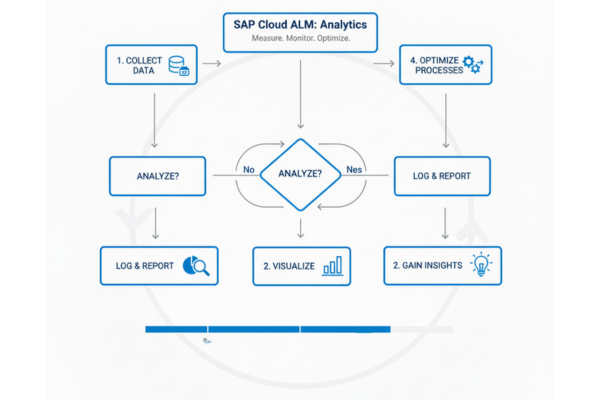
Analytics refers to the collection, visualization, and interpretation of data generated throughout the SAP implementation lifecycle. It includes dashboards, reports, and trend analyses that provide insights into:
- Requirement coverage and gaps
- Test execution progress and results
- Defect trends and resolution timelines
- Release readiness and milestone adherence
- Overall project health and risk indicators
These insights help teams identify bottlenecks, prioritize corrective actions, and ensure project alignment with business objectives.
Key Capabilities
Interactive Dashboards
Visualize project data in real time with customizable dashboards showing metrics such as test coverage, defect status, and release progress.
Trend Analysis
Identify recurring issues or bottlenecks by analysing defect trends, delayed test cases, or incomplete requirements over time.
KPI Monitoring
Track key performance indicators (KPIs) for SAP implementations, including:
- Test execution rates
- Defect resolution times
- Release adherence
- Requirement completion
Predictive Insights
Advanced analytics allow project teams to forecast risks, highlight potential delays, and make data-driven decisions before issues escalate.
End-to-End Traceability
Link analytics directly to requirements, test plans, and defects, providing a complete view of project status at a glance.
Benefits of Using Analytics in SAP Cloud ALM
- Enhanced Project Transparency – Gain a real-time overview of all project activities.
- Data-Driven Decision Making – Prioritize efforts based on actual project performance.
- Risk Mitigation – Identify potential delays and high-impact issues early.
- Continuous Improvement – Learn from past trends to improve future implementations.
- Better Collaboration – Share insights with business, functional, and technical teams.
Best Practices
- Define clear KPIs aligned with project objectives
- Use dashboards to monitor key project areas daily
- Drill down from aggregated metrics to individual test cases or defects
- Review trends regularly to identify improvement opportunities
- Share insights with stakeholders to improve decision-making
Transform Project Data into Actionable Insights
SAP Cloud ALM Analytics enables organizations to monitor, analyse, and optimize their SAP implementation projects. By leveraging interactive dashboards, KPI tracking, and end-to-end traceability, teams can make smarter, faster, and data-driven decisions ensuring successful SAP implementations and confident go-lives.