Configuration & Security Analysis

Configuration & Security Analysis stands as a cornerstone of robust IT infrastructure. It goes beyond just setting up systems; it’s about fine-tuning configurations to optimize performance while maintaining an ironclad shield against security threats.

Configuration & Security Analysis stands as a cornerstone for enterprises aiming to optimize their IT systems while safeguarding sensitive data. Proper configuration ensures that software and hardware components interact seamlessly, maximizing efficiency and system uptime. Meanwhile, a robust security analysis delves deep into potential vulnerabilities, ensuring that systems are not just running at their best but are also protected against threats.

However, the balance between configuration and security is delicate. Too much emphasis on one can compromise the other. For businesses, this means maintaining a vigilant and iterative approach to both, ensuring that as configurations change, security measures evolve concurrently. In this dance of precision, businesses can find the sweet spot where operations hum smoothly, and data remains uncompromised.

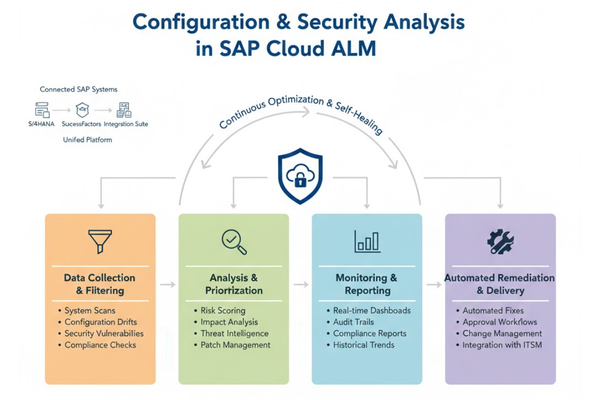
Configuration & Security Analysis in SAP Cloud ALM

In modern SAP landscapes, maintaining secure, compliant, and well-configured systems is essential for operational stability and business continuity. Misconfigurations or security gaps can lead to process disruptions, compliance violations, and increased risk exposure. Configuration & Security Analysis in SAP Cloud ALM provides organizations with a centralized approach to continuously monitor, assess, and improve system configurations and security settings across their SAP landscape.

Why Configuration & Security Analysis Matters

Managing configurations and security settings in a complex SAP environment is challenging. Organizations face multiple risks:

Configuration Drift
Over time, systems may diverge from established best practices, leading to errors or operational inefficiencies.
Security Vulnerabilities
Inconsistent settings or outdated patches can create exposure points for potential threats.
Compliance Gaps
Regulatory requirements demand proof that systems are configured securely and consistently.
Limited Visibility
Without centralized monitoring, IT teams struggle to track system changes and security posture across multiple SAP solutions.

Configuration & Security Analysis addresses these challenges by providing continuous insights into system settings, enabling proactive remediation and ensuring alignment with operational and security standards.

Core Capabilities

Centralized Monitoring
Cloud ALM collects configuration and security data across SAP systems, creating a unified view of system compliance and risk.
Automated Checks and Alerts
Predefined rules and best-practice checks identify deviations in configurations, missing patches, or security misalignments. Alerts notify administrators of potential risks before they escalate into critical incidents.
Risk Assessment and Prioritization
Detected issues are analyzed for potential business and operational impact. Teams can prioritize remediation based on severity, regulatory implications, or operational relevance.
Change Tracking and Auditability
All configuration changes, security updates, and remediation actions are logged and tracked. This provides transparency, supports audits, and ensures accountability.
Proactive Recommendations
Based on system analysis, Cloud ALM can suggest corrective actions or preventive measures, helping organizations maintain operational stability and security compliance continuously.

Benefits for Enterprises

Implementing Configuration & Security Analysis in SAP Cloud ALM delivers measurable advantages:

Reduced Risk Exposure
Over time, systems may diverge from established best practices, leading to errors or operational inefficiencies.
Improved Compliance
Inconsistent settings or outdated patches can create exposure points for potential threats.
Operational Stability
Regulatory requirements demand proof that systems are configured securely and consistently.
Efficiency in IT Operations
Without centralized monitoring, IT teams struggle to track system changes and security posture across multiple SAP solutions.
Transparency and Accountability
Comprehensive logs and dashboards provide stakeholders with a clear view of system health, configuration status, and security posture.
Share this post
Facebook
LinkedIn