
Defect Management in SAP Cloud ALM
In any SAP implementation or upgrade project, defects are inevitable. These defects, if not managed properly, can lead to delayed go-lives, increased costs, and reduced user satisfaction. That’s where SAP Cloud ALM’s Defect Management comes in — a centralized, structured, and traceable approach to identifying, documenting, tracking, and resolving issues throughout the implementation lifecycle.
SAP Cloud ALM provides a robust platform for defect management, integrating seamlessly with test execution, requirements, and release management. This integration ensures that every defect is not just logged, but also linked to the relevant test cases, requirements, and solution components, providing full traceability and transparency.
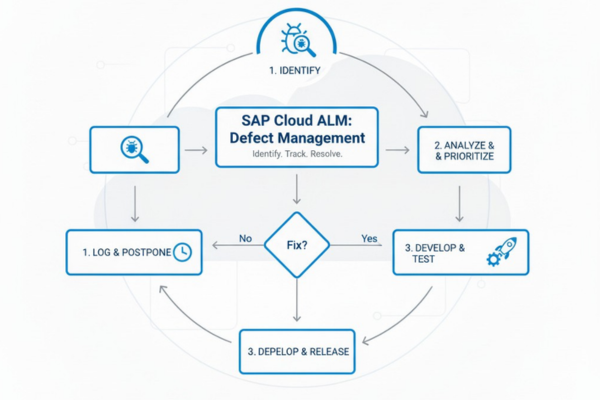
What Are Defects in SAP Cloud ALM?
A defect is any issue, deviation, or error identified during:
- Test execution
- User Acceptance Testing (UAT)
- Integration testing
- Regression testing
- Post-deployment validation
Each defect in SAP Cloud ALM is structured and detailed, capturing essential information such as:
- Description of the issue
- Steps to reproduce the defect
- Expected vs. actual results
- Severity and priority
- Assigned owner
- Status tracking
This structured approach ensures that all stakeholders understand the impact, urgency, and status of each issue.
Key Features of Defect Management in SAP Cloud ALM
1. Integrated with Test Execution
Defects can be created directly from failed test cases, linking them automatically to the related requirement, test plan, or solution process. This ensures end-to-end traceability from requirement → test case → defect → resolution.
2. Lifecycle Tracking and Status Management
SAP Cloud ALM allows you to track defect progress through defined statuses such as:
- New
- In Progress
- Resolved
- Retested
- Closed
This makes it easy to monitor defect resolution and maintain accountability across teams.
3. Role-Based Assignment
Defects can be assigned to functional or technical owners with clear responsibilities, ensuring accountability and faster resolution.
4. Notes, Attachments, and Collaboration
Users can add screenshots, logs, and comments to defects. This makes analysis faster and provides context for developers, functional consultants, and business users.
5. Dashboards and Reporting
SAP Cloud ALM dashboards provide real-time insights into defect trends, resolution times, priority distributions, and overall project quality. Project managers can quickly identify risk areas and take proactive measures.
Types of Defects Commonly Managed
SAP Cloud ALM supports tracking of all types of defects identified during implementation:
- Functional Defects – Errors in specific business processes or configurations
- Integration Defects – Issues when modules or systems fail to interact as expected
- End-to-End Process Defects – Problems affecting complete business processes across multiple modules
- Regression Defects – Errors introduced during changes or transport of objects
By categorizing defects, teams can prioritize and resolve them efficiently, minimizing project delays.
Why Defect Management Matters
Effective defect management in SAP Cloud ALM:
- Improves solution quality before go-live
- Reduces business risks and operational disruptions
- Ensures audit readiness and compliance
- Enhances collaboration between business, functional, and technical teams
- Provides full traceability from requirement to defect resolution
Without a structured defect management process, projects risk rework, miscommunication, and missed deadlines.
Best Practices for Defect Management in SAP Cloud ALM
- Log defects immediately during testing or issue identification
- Provide detailed reproduction steps and context
- Prioritize defects based on business impact
- Assign clear ownership for resolution
- Retest and validate fixes before closure
- Analyze defect trends to prevent recurring issues