Processes
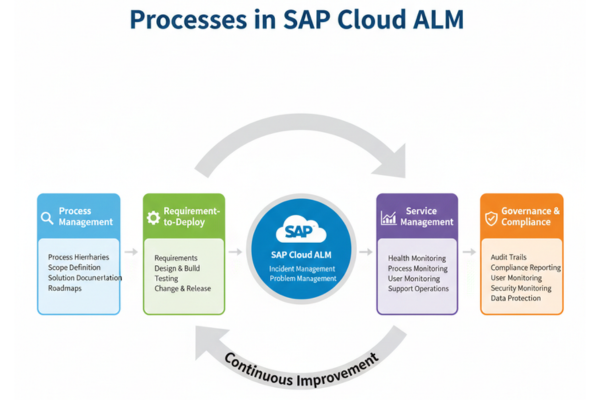
Processes in SAP Cloud ALM serve as the blueprint for how businesses design, implement, test, and operate their SAP solutions. They provide a structured, content-driven approach that ensures teams stay aligned, requirements remain traceable, and projects progress with clarity and confidence.
What Are Processes in SAP Cloud ALM?
SAP Cloud ALM offers rich, pre-delivered business content based on SAP Best Practices, including process diagrams, test cases, process assets, and CIAS workflows. These elements form the foundation of process management and guide teams through every step of their implementation journey. Customers can select relevant processes from SAP’s content library, adjust them, or even model their own business processes directly within the platform.
This flexibility ensures that organizations can adopt standard SAP processes while tailoring them to meet unique business needs.
Why Processes Matter in SAP Cloud ALM
1. Clear Scope Definition
Process management begins with scoping. Teams can browse SAP Best Practice processes and select the ones that match their project goals. This ensures that the project scope is grounded in proven, standardized business flows.
2. Fit-to-Standard Workshops
One of the most critical phases of SAP Activate is the Fit-to-Standard workshop. SAP Cloud ALM enhances this experience by providing detailed process diagrams that visualize end-to-end flows. These diagrams help business users understand how SAP supports their requirements and where gaps may exist.
3. Process Authoring for Customization
When standard content does not fully align with business needs, SAP Cloud ALM offers a Process Authoring tool. Business process experts can create or modify processes to reflect custom scenarios. This capability is especially valuable during workshops, where teams often identify unique requirements that need tailored solutions.
4. End-to-End Traceability
Processes in SAP Cloud ALM are not isolated diagrams; they are deeply integrated with:
- Requirements
- User stories
- Test cases
- Deployment tasks
- Operational monitoring
This creates a seamless chain of traceability from design to production, ensuring that every requirement is implemented, tested, and monitored effectively.
Processes in SAP Cloud ALM for Operations
Beyond implementation, SAP Cloud ALM extends process thinking into operations. The platform supports the Detect-to-Correct lifecycle through full-stack monitoring, proactive alerts, and automated corrective actions. These operational processes help ensure business continuity and optimize system performance.
This means organizations can not only build SAP solutions efficiently but also run them with confidence.
Benefits of Using Processes in SAP Cloud ALM
- Accelerated Time-to-Value
- Improved Collaboration
- Higher Quality Deliverables
- Scalable and Cloud-Native
Pre-delivered content and guided workflows reduce the time needed to design and validate business processes. Process diagrams and linked assets create a shared understanding across business and IT teams. Integrated test cases and traceability ensure that nothing falls through the cracks. As a cloud-native platform, SAP Cloud ALM continuously evolves with new content and capabilities.