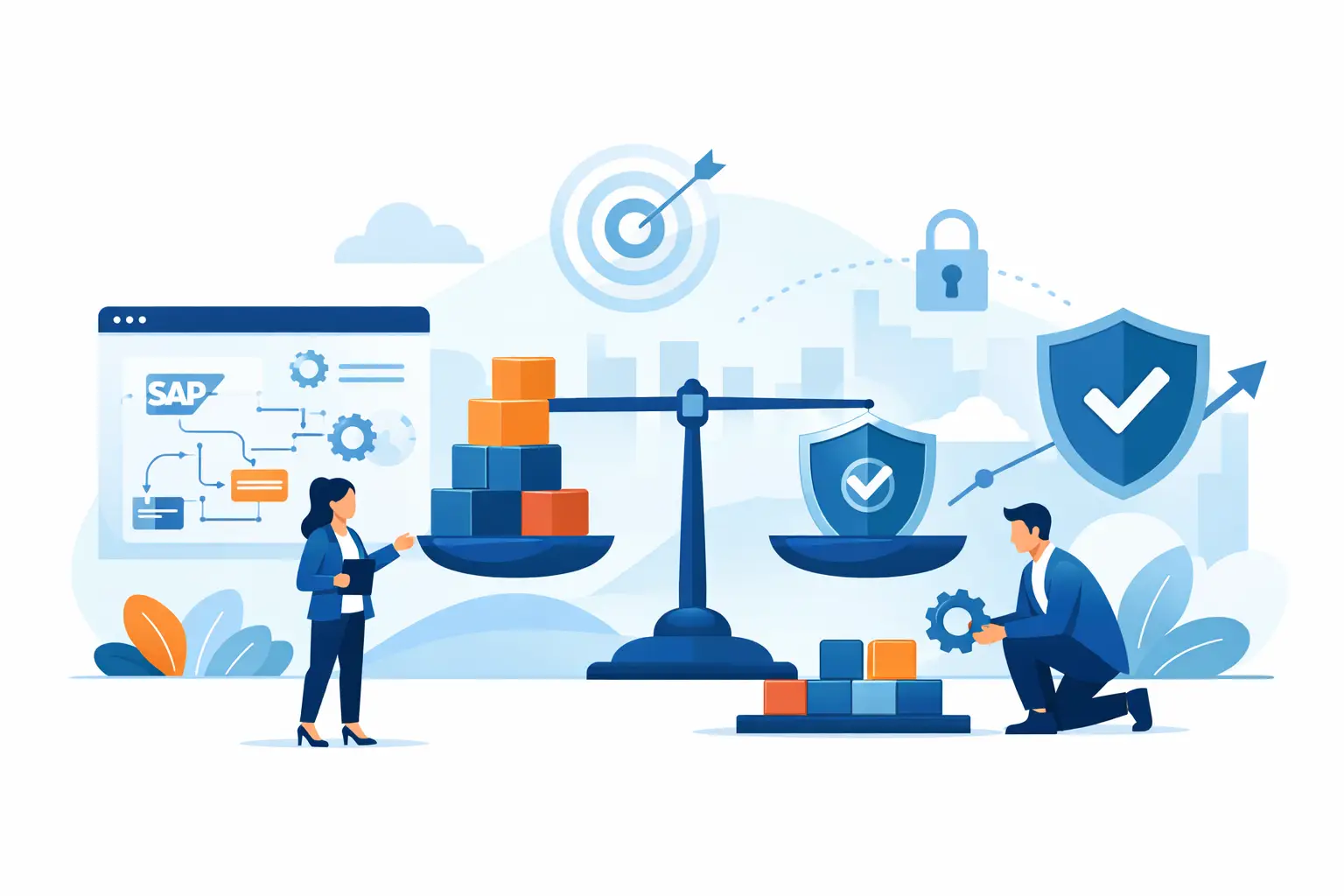
A Cloud ALM tenant rarely fails because one feature is missing. More often, it loses value because administration is treated as a one-time setup instead of an operating discipline. The best practices for cloud alm administration are the ones that keep governance clear, monitoring useful, access controlled, and day-to-day ownership firmly in place after go-live.
For SAP-driven organizations, that matters quickly. When implementation teams, operations teams, and service owners all depend on the same platform, weak administration turns into inconsistent data, missed alerts, unclear accountability, and avoidable operational noise. Good administration does not just keep the tenant clean. It protects the business case for SAP Cloud ALM.
Why cloud ALM administration deserves a formal operating model
Many organizations start with a technical focus. They activate core capabilities, connect systems, assign a few users, and move on to project execution or monitoring. That approach works in the early phase, but it usually does not scale well once more teams, landscapes, and use cases are added.
Cloud ALM administration sits at the intersection of platform governance, user enablement, process quality, and operational reliability. That means the admin role should not be limited to basic configuration. It should own standards for tenant structure, authorization design, integration oversight, data quality, and release discipline.
In practice, the strongest results come when administration is positioned as a service function, not a background task. Someone needs to define how the platform will be used, who is accountable for what, and how changes will be introduced without disrupting active teams.
Best practices for cloud ALM administration start with ownership
The first administration mistake is assuming shared responsibility will take care of itself. It usually does not. If implementation leads manage some areas, operations owns others, and security is only occasionally involved, gaps appear fast.
A better model is to define one primary Cloud ALM administration owner and then establish named supporting roles across security, integration, monitoring, and process governance. The primary owner does not need to do every task personally, but that role should control standards, approvals, and platform health reviews.
This is also where executive expectations should be set early. Some organizations want a tightly governed platform with formal change control. Others prioritize speed and team autonomy. Both can work, but the administration model has to match the operating culture. Too much control slows adoption. Too little control creates long-term cleanup work.
Define your tenant management standards early
Tenant administration gets harder after multiple teams are already active. Naming conventions, workspace structures, scope boundaries, and role assignments should be defined before usage expands.
This sounds basic, but it has major downstream impact. Standardized naming makes dashboards, task tracking, and monitoring views easier to manage. Consistent scoping reduces duplicate effort. Clear conventions also make onboarding new teams much faster, which matters when Cloud ALM moves from pilot phase into enterprise use.
If your organization operates multiple programs or regional teams, decide early what will be standardized globally and what can remain local. The right answer depends on scale, maturity, and reporting requirements. A global template can improve consistency, but if it ignores local process realities, teams will work around it.
Treat authorization design as an operational control
Access management in SAP Cloud ALM should be reviewed as part of administration strategy, not handled only during initial user setup. Broad access may seem efficient at first, but it creates audit concerns and increases the chance of accidental changes to configuration, monitoring content, or project artifacts.
Role design should align with actual responsibilities. Program managers, implementation consultants, monitoring analysts, service operators, and administrators need different levels of access. The more closely authorizations reflect real work, the easier it is to maintain both control and accountability.
Periodic access reviews are equally important. Teams change, projects end, and contractors roll off. If administration does not include recurring review cycles, stale access builds up quietly. That is one of the simplest areas to tighten and one of the most commonly overlooked.
Keep integrations accurate, visible, and reviewed
Cloud ALM is only as useful as the data coming into it. Administration therefore needs a consistent process for validating system connections, agent status, event flows, and data completeness. If integrations are unstable or partially configured, users lose confidence in the platform fast.
This is especially true for monitoring scenarios. A dashboard that looks complete but contains gaps is more dangerous than a dashboard that is clearly incomplete. Administrators should establish a routine to verify connection health, review onboarded systems, and confirm that expected metrics and events are actually being collected.
There is also a strategic choice here. Some organizations try to onboard everything immediately. Others phase by business criticality. In most SAP landscapes, phased onboarding is the better administrative path. It allows the team to validate quality, fine-tune alerting, and build trust before scaling out.
Avoid alert overload from day one
One of the fastest ways to weaken Cloud ALM adoption is to flood teams with alerts they cannot act on. Administration should include threshold tuning, event rationalization, and ownership mapping for each major monitoring area.
A useful rule is that every alert should have a likely owner and a likely response path. If not, it may be noise. Technical teams do need broad visibility in some cases, but alerting strategy should favor actionability over volume.
This is where administration and operations need close alignment. The admin function should not set monitoring rules in isolation. Basis teams, support leads, and service owners should help determine what matters, what is informational, and what should trigger escalation.
Build change control into the platform itself
Cloud ALM administration should evolve with the SAP landscape, not lag behind it. New systems, new projects, changed business processes, and revised support models all affect how the platform should be configured and used.
That is why change control matters. Administrative changes should be documented, reviewed, and scheduled with enough discipline to avoid confusion for active users. This does not require heavy bureaucracy, but it does require traceability. When a role model changes, a workspace is restructured, or a monitoring policy is adjusted, people should know what changed and why.
A lightweight governance cadence works well for many organizations. Monthly reviews are often enough to assess usage growth, open admin issues, pending improvements, and risks tied to new SAP initiatives. The point is to keep the platform aligned with the business, not frozen in its original setup.
Support adoption with admin-led enablement
Administration is not only technical stewardship. It also includes helping users work correctly inside the platform. If teams do not understand how Cloud ALM is structured, how responsibilities are assigned, or how data should be maintained, the tenant degrades over time.
That is why effective administrators invest in enablement. Short training sessions, role-based guidance, and documented standards are usually more effective than one large generic training effort. Teams need to understand the parts of Cloud ALM they actually touch and the consequences of inconsistent usage.
This is particularly important in cross-functional SAP programs. Implementation users may prioritize speed and task flow. Operations users care more about monitoring accuracy and incident response. Administration needs to bridge those needs without letting the platform fragment into separate habits and workarounds.
Measure administration quality, not just platform usage
A mature administrative model looks beyond login counts or the number of connected systems. Those metrics have value, but they do not tell you whether Cloud ALM is being governed well.
Better indicators include access review completion, unresolved admin defects, percentage of monitored systems with validated data quality, alert noise ratios, onboarding cycle time, and adherence to tenant standards. These metrics show whether the platform is reliable and manageable, not just active.
For leadership, the message should stay business-focused. Strong administration reduces operational risk, supports cleaner governance, improves confidence in monitoring, and shortens the path from rollout to measurable value. That is the real return on disciplined Cloud ALM administration.
When to bring in specialist support
Some organizations can manage administration internally once standards are established. Others need outside support because the SAP landscape is changing quickly, internal ownership is split, or Cloud ALM was deployed without a long-term operating model.
The key is recognizing the gap early. If administration is reactive, monitoring quality is inconsistent, or teams are unclear on roles and standards, specialist guidance can accelerate stabilization. A focused SAP Cloud ALM partner can help define governance, tighten configuration, improve adoption, and build an admin model that fits both implementation and operations. That is where a specialist firm such as CloudALMexperts can add value, especially when speed and execution quality matter.
The strongest administration teams are not the ones doing the most manual work. They are the ones creating clarity – clear ownership, clear standards, clear controls, and clear expectations for how Cloud ALM supports the business every day.