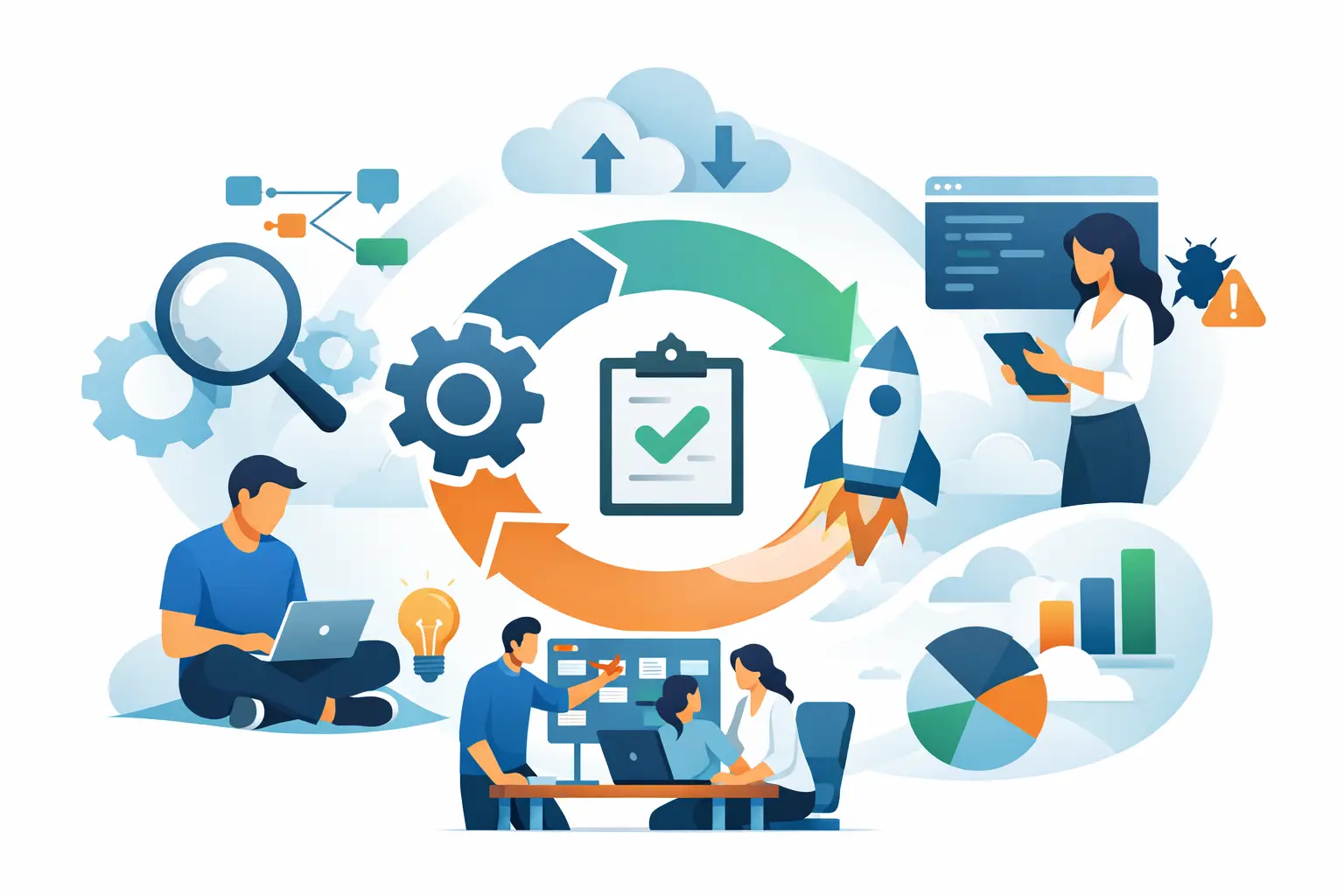
A Cloud ALM assessment should begin before configuration decisions, dashboard requests, or training plans are put in motion. For SAP organizations managing cloud transformation, the real question is not whether SAP Cloud ALM is available. It is whether the organization has the scope, governance, ownership, data, and operating discipline to use it as a dependable lifecycle management platform.
When those foundations are unclear, teams often activate capabilities without changing the behaviors around them. Project tasks live in one tool, operational alerts land in another, and service teams rely on manual follow-up to close gaps. An assessment brings those disconnected practices into view and turns Cloud ALM planning into an actionable program.
What a Cloud ALM Assessment Should Deliver
A useful assessment is not a feature checklist. It is a structured review of how SAP delivery and operations work today, what must improve, and which SAP Cloud ALM capabilities can support that outcome. The result should be a prioritized roadmap with clear ownership, practical sequencing, and measurable success criteria.
For some organizations, the priority is implementation governance for an SAP S/4HANA program. For others, it is gaining earlier visibility into integration failures, application health, job exceptions, and service-level performance after go-live. These needs can overlap, but they should not be treated as one generic workstream. The right Cloud ALM design depends on the business context, SAP landscape, and maturity of the teams that will operate it.
7 Areas to Evaluate in a Cloud ALM Assessment
1. Transformation scope and business priorities
Start with the transformation agenda, not the tool. Identify the SAP programs, cloud products, rollout waves, integrations, and operational outcomes that Cloud ALM must support. A global template deployment has different requirements from a targeted S/4HANA conversion or a post-go-live monitoring improvement initiative.
This conversation should also establish what success means. It may include improved release predictability, stronger testing traceability, reduced time to detect issues, fewer business-impacting incidents, or a more consistent handoff from project to operations. Without agreed outcomes, teams can spend time enabling capabilities that provide activity but little operational value.
2. Current implementation governance
SAP Cloud ALM for Implementation can provide structure for requirements, project tasks, test preparation, testing, deployment coordination, and project reporting. The assessment should examine how these activities are performed today and where governance breaks down.
Look closely at ownership, approval paths, status reporting, requirements traceability, test evidence, and defect management. If a program depends on spreadsheets, disconnected project tools, or informal status updates, Cloud ALM can create a more transparent process. However, the platform will not resolve unclear decision rights or inconsistent delivery methods on its own. Those process issues need to be addressed alongside configuration.
3. Operational monitoring coverage
Monitoring is often the most visible part of SAP Cloud ALM, yet it requires careful scoping. The assessment should map critical business processes, SAP applications, integrations, interfaces, scheduled jobs, and technical dependencies. It should identify which events matter, who needs to act on them, and how quickly they need to respond.
A broad monitoring design may offer maximum visibility, but it can also produce alert fatigue if thresholds, event categories, and notification paths are not calibrated. A narrower initial scope may create faster adoption and prove value sooner. The right choice depends on operational risk, available support capacity, and the stability of the underlying landscape.
4. Incident, event, and service processes
An alert has limited value if no team owns the next action. Assess how events are triaged, escalated, resolved, documented, and reviewed. Determine whether operations teams can distinguish between informational notifications, early warning signals, and incidents that require immediate intervention.
This is also the point to evaluate service delivery processes. SAP Cloud ALM can support a more disciplined operating model, but the organization needs defined roles for monitoring analysts, SAP application owners, Basis teams, integration teams, and service managers. Escalation matrices, support hours, severity definitions, and service reporting should be established before the platform becomes part of daily operations.
5. Landscape, integration, and data readiness
Cloud ALM needs accurate connections and relevant data to provide useful insight. The assessment should review the SAP solutions in scope, tenant and system access, cloud service dependencies, integration architecture, and required setup activities. It should also identify technical prerequisites, ownership for provisioning, and any security or compliance constraints.
Data quality matters as much as connectivity. If business process names, system ownership, notification groups, or service classifications are inconsistent, monitoring and reporting will reflect that inconsistency. Establishing a usable inventory early makes later configuration more efficient and reduces avoidable rework.
6. Roles, skills, and administration
Cloud ALM is not a set-and-forget service. It needs administration, access governance, content maintenance, monitoring refinement, and periodic review. An assessment should clarify who owns platform administration and who owns each functional area after implementation.
Review the current skill profile across project management, testing, SAP operations, integration support, and reporting. Training should be role-based, not limited to a general product overview. A project lead needs confidence in implementation governance, while an operations analyst needs practical experience interpreting events, managing alerts, and documenting follow-up actions. Teams also need a support model for questions that arise after initial enablement.
7. Reporting, dashboards, and measurable outcomes
Leaders need visibility without being overwhelmed by technical detail. The assessment should define which metrics will guide decisions at the program, operations, and executive levels. Useful measures may include test execution progress, open defects by severity, deployment readiness, alert volumes, response times, recurring incident patterns, and business process exceptions.
SAP Cloud ALM reporting may be sufficient for many needs. In other cases, organizations require consolidated dashboards through tools such as SAP Analytics Cloud, Grafana, or SPLUNK to bring Cloud ALM insights together with broader operational data. That decision should be based on audience needs and reporting architecture, not on a preference for more visual dashboards. A dashboard is valuable only when it drives a timely decision or action.
Turning Assessment Findings Into a Delivery Roadmap
The strongest assessment output separates immediate actions from longer-term maturity goals. Immediate actions could include confirming ownership, connecting priority systems, configuring a critical monitoring scenario, or standardizing test status reporting for an active release. These early steps build confidence and provide evidence that the new operating approach works.
The next phase should sequence broader capabilities around business milestones. For example, an implementation program may first focus on requirements and testing, then formalize deployment governance, and finally transition defined monitoring responsibilities to operations. An established production environment may begin with high-impact integration monitoring before expanding to end-to-end business process monitoring.
Each roadmap item should name an accountable owner, expected outcome, dependency, and measure of success. This prevents Cloud ALM from becoming a side initiative managed separately from transformation delivery or IT service management. It also makes leadership sponsorship more meaningful because progress can be reviewed against agreed business outcomes.
When Specialist Support Adds Value
Internal SAP teams understand their landscape and business priorities. Specialist support can accelerate decisions when teams need a clear view of Cloud ALM capabilities, hands-on configuration experience, or a structured transition into operations. This is particularly relevant when a program has limited time before go-live, multiple cloud solutions, fragmented monitoring practices, or no established Cloud ALM administration model.
CloudALMexperts helps organizations assess their current state, define a fit-for-purpose roadmap, configure priority capabilities, and prepare teams to run SAP Cloud ALM with confidence. The goal is not to add another layer of consulting. It is to establish an operating model that continues to deliver value after the initial engagement ends.
A well-run assessment gives SAP leaders a practical starting point: address the risks that matter first, assign ownership before alerts arrive, and build Cloud ALM capabilities in the same order the business needs them.