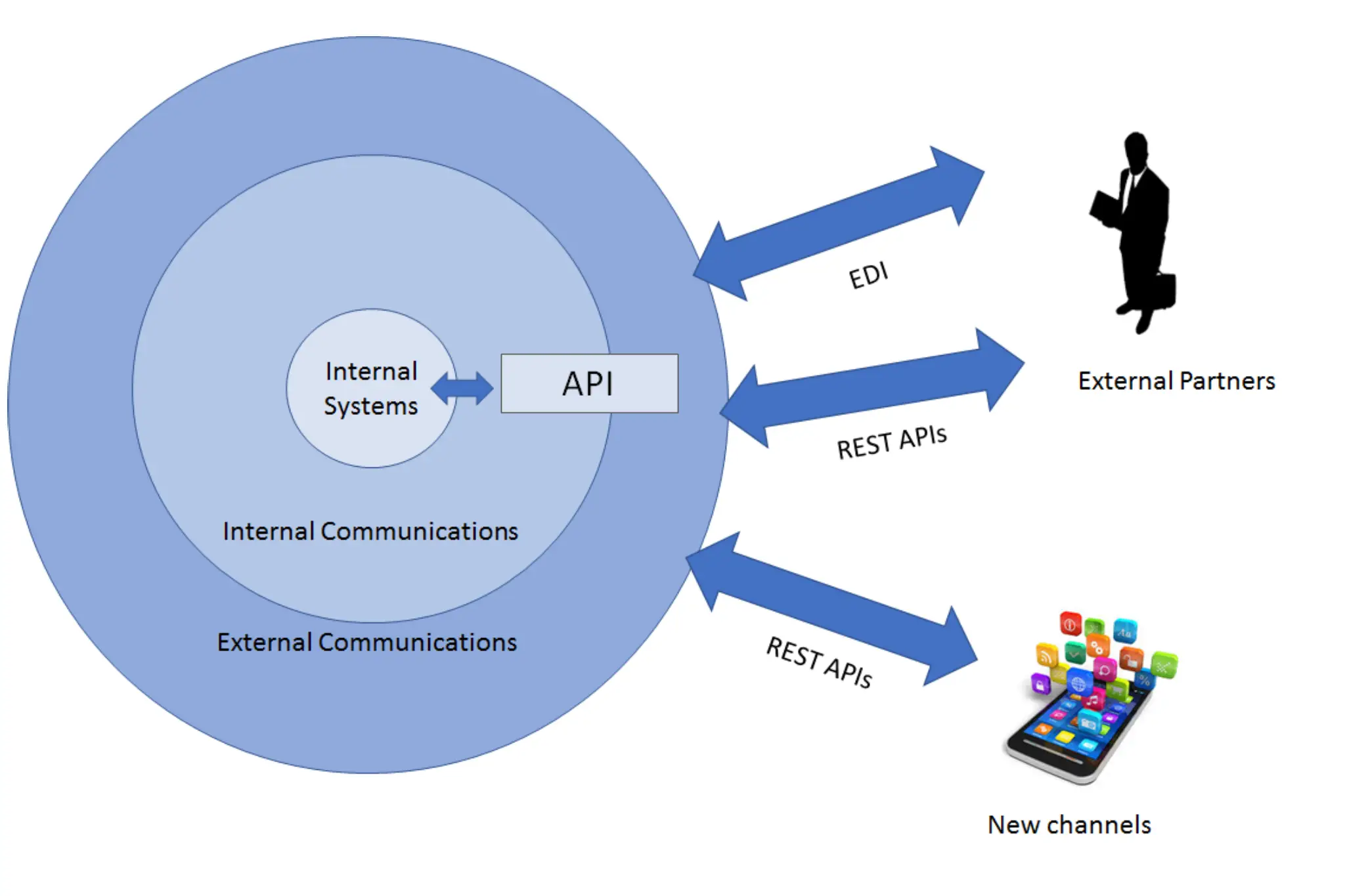
Landscape Management has transitioned from merely being a practice of maintaining green spaces to a comprehensive discipline that intertwines aesthetics, sustainability, and ecology. Today’s professionals don’t just mow lawns and trim hedges; they curate outdoor environments that resonate with the architectural ethos of structures, promote biodiversity, and offer serene sanctuaries in bustling urban settings.
Furthermore, with the advent of technology, landscape management now employs digital tools and software to optimize irrigation, monitor plant health, and even predict future growth patterns. This convergence of art, science, and technology ensures that our outdoor spaces are not only beautiful but are also sustainable and in harmony with the surrounding environment.
SAP Landscape Management (LaMa) is SAP’s orchestration solution that helps enterprises simplify, automate, and centralize the management of complex SAP system landscapes across on‑premise, cloud, and hybrid environments. It reduces operational costs, accelerates system refreshes, and provides a single interface for landscape‑wide visibility.
Landscape Management
Managing a complex SAP environment requires more than basic system monitoring, it demands structured visibility, centralized control, and seamless integration across cloud and on-premise systems. SAP Cloud ALM Landscape Management services help organizations gain full transparency over their SAP ecosystem, ensuring stability, governance, and operational efficiency in hybrid and cloud-first environments.
As enterprises adopt SAP S/4HANA, SAP BTP, and other cloud solutions while maintaining existing on-premise systems, the SAP landscape becomes increasingly interconnected. Without a unified management approach, IT teams often face fragmented system documentation, inconsistent monitoring, and limited insight into system dependencies. SAP Cloud ALM Landscape Management provides a centralized framework to register, organize, and maintain all systems within a single, structured platform.
What is Landscape Management in SAP Cloud ALM?
Landscape Management in SAP Cloud ALM is the process of onboarding, structuring, and maintaining visibility of all technical systems, tenants, and integrations across your SAP environment. It creates a comprehensive system inventory that acts as a single source of truth for your organization’s SAP landscape. Landscape Management in SAP Cloud ALM helps you manage information on your managed cloud services, on-premise systems, and business services. The landscape information stored in Landscape Management is the basis for all other applications in SAP Cloud ALM.
This structured modelling ensures that every connected system, whether cloud-based or on-premise is clearly defined with its role, dependencies, and communication setup. Development, Quality, and Production systems can be accurately mapped, reducing operational risks and improving lifecycle governance.
Why Businesses Need SAP Cloud ALM Landscape Management Services
Organizations operating hybrid SAP landscapes face several challenges:
- Lack of centralized system documentation
- Difficulty understanding integration dependencies
- Delays in troubleshooting due to unclear system relationships
- Governance and compliance gaps
- Inconsistent monitoring configurations
Professional SAP Cloud ALM Landscape Management services address these challenges by establishing a well-structured landscape model that supports monitoring, operations, and compliance requirements.
By ensuring accurate system registration and configuration, businesses gain better control over their environment and reduce operational complexity.
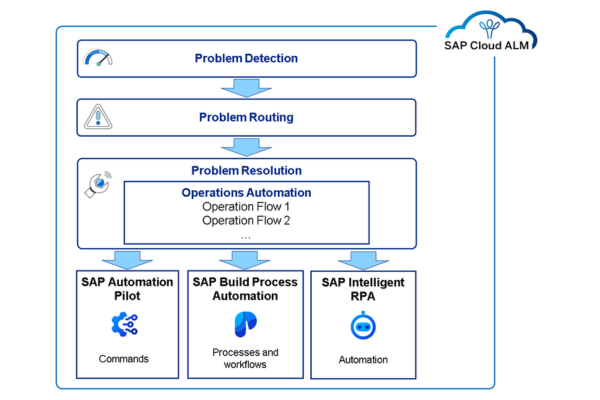
Key Capabilities of SAP Cloud ALM Landscape Management
Centralized System Registration
Hybrid Landscape Visibility
Dependency and Integration Mapping
Foundation for Monitoring and Operations
Governance and Compliance Support
Business Benefits of SAP Cloud ALM Landscape Management
Investing in SAP Cloud ALM Landscape Management services delivers measurable advantages:
Improved Operational Stability
Structured visibility reduces configuration errors and improves monitoring accuracy.
Faster Root Cause Analysis
When issues arise, IT teams can quickly assess system dependencies and minimize downtime.
Reduced Risk Exposure
Clear documentation of integrations and system connections reduces the likelihood of unmanaged or shadow systems.
Scalability for Growth
As businesses expand, new systems and tenants can be onboarded seamlessly without disrupting existing operations.
Enhanced Collaboration
Implementation, operations, and infrastructure teams work from a shared, centralized landscape view, improving communication and decision-making.
Supporting Digital Transformation
Modern digital transformation initiatives depend on reliable and scalable SAP landscapes. Whether migrating to SAP S/4HANA Cloud, integrating new SAP BTP services, or optimizing hybrid environments, Landscape Management ensures structured control throughout the transition.
By maintaining accurate system modelling and connectivity documentation, SAP Cloud ALM supports continuous innovation while preserving operational stability. This balance between agility and governance is essential for long-term success.