A successful SAP Cloud ALM migration example rarely starts with a technical switch. It starts when an SAP team recognizes that its current application lifecycle management model is no longer giving leaders enough control, delivery teams enough structure, or operations enough visibility.
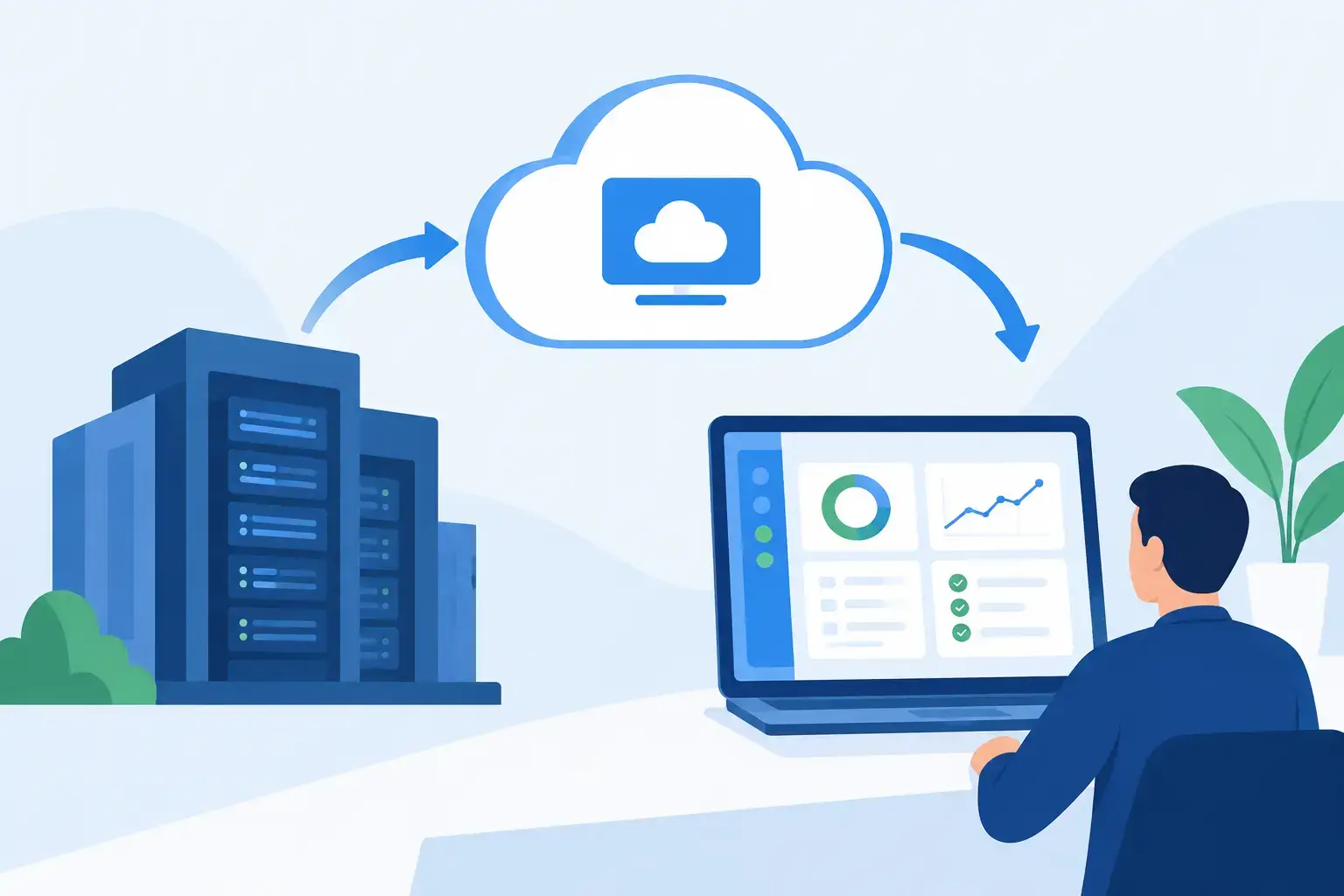
Many organizations arrive at this point while moving to SAP S/4HANA, expanding SAP cloud solutions, or reassessing their reliance on SAP Solution Manager. Their landscapes may include mature on-premises systems, new cloud applications, separate monitoring tools, and delivery processes that have evolved differently across teams. The challenge is not simply deploying SAP Cloud ALM. The challenge is establishing a practical operating model that improves implementation governance and production operations without creating disruption.
This example shows how a phased migration can turn Cloud ALM from another tool in the stack into a dependable foundation for delivery, monitoring, and continuous improvement.
The starting point: fragmented ALM across a changing SAP landscape
Consider a US-based manufacturing organization preparing for a phased SAP S/4HANA transformation. The company runs a complex ECC environment, several connected SAP and non-SAP applications, and a growing portfolio of cloud services. Its program team uses a mix of spreadsheets, project tools, and legacy ALM capabilities to manage requirements, testing, defects, and deployment readiness.
The operations team faces a different problem. Monitoring data is spread across multiple consoles, alerts are inconsistent, and incident response depends heavily on the knowledge of a few experienced SAP Basis and functional specialists. Leadership can see project milestones, but not a reliable view of quality, operational readiness, or business-process risk.
The company does not need to replicate every existing SAP Solution Manager function in SAP Cloud ALM. That would be the wrong objective. SAP Cloud ALM is designed around cloud-centric lifecycle processes, and its scope should be matched to the organization’s roadmap, supported applications, and operational priorities. A migration plan must therefore distinguish between capabilities that should move, capabilities that should be redesigned, and capabilities that should remain in another tool for the time being.
Defining the SAP Cloud ALM migration scope
The program begins with a focused discovery effort. Rather than treating Cloud ALM as a platform installation, the transformation team evaluates how work actually moves from requirement to production and how production issues are detected, triaged, and resolved.
For implementation, the immediate priorities are requirements traceability, project and task management, test preparation, defect handling, deployment planning, and readiness reporting. For operations, the priority is establishing monitoring for the SAP cloud services and business processes that will be most critical after each release.
This assessment produces a capability map with clear decisions. Existing project documentation is reviewed and organized into relevant Cloud ALM requirements and work packages. Test scenarios are rationalized rather than copied in full, because outdated or duplicate test cases create false confidence and add unnecessary maintenance. Monitoring use cases are ranked by business impact, such as order-to-cash failures, interface disruption, batch-job exceptions, and performance degradation in essential processes.
The key decision is sequencing. The organization chooses to implement SAP Cloud ALM for its active S/4HANA program first, then expand SAP Cloud ALM for Operations after the initial production scope is stable. This limits change fatigue and lets delivery teams learn the platform in the context of real work.
A phased implementation model
The migration is organized around four connected workstreams:
- Establish Cloud ALM governance, tenant administration, authorizations, naming standards, and ownership.
- Configure implementation capabilities for requirements, tasks, testing, defects, and deployment transparency.
- Onboard prioritized operational monitoring and define alert, notification, and escalation procedures.
- Train delivery and operations teams, then measure adoption against agreed outcomes.
Phase 1: Build governance before configuration
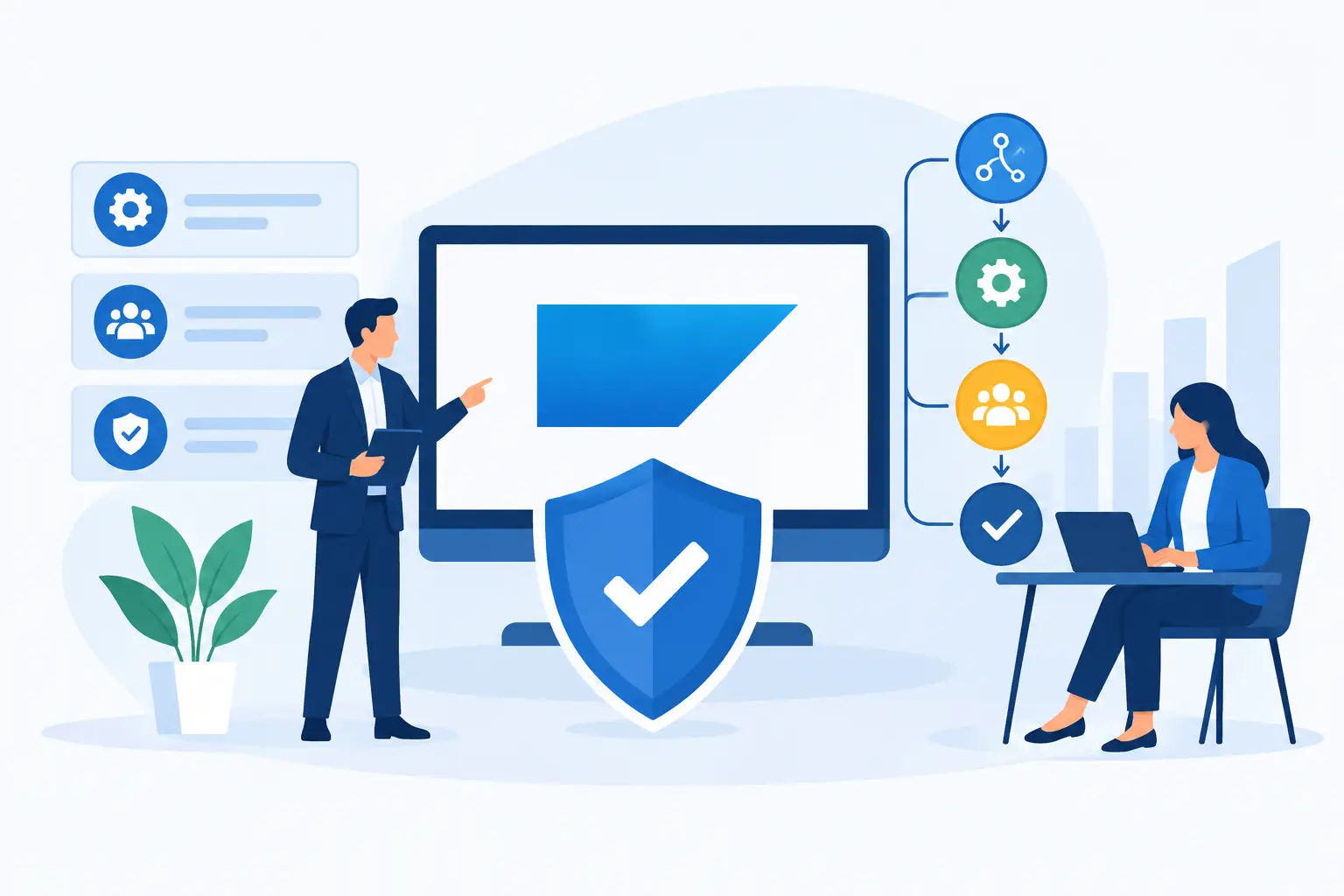
The first phase creates the guardrails that prevent Cloud ALM from becoming an unstructured workspace. The company defines who owns platform administration, who can configure projects and monitoring, who approves template changes, and who is accountable for data quality.
Naming conventions are established for projects, requirements, test plans, business processes, and monitoring events. Role-based authorizations are aligned to program responsibilities rather than granted broadly for convenience. This work may seem administrative, but it has direct operational value. Without common standards, dashboards become difficult to interpret, reporting loses credibility, and teams revert to offline workarounds.
The organization also agrees on a practical governance cadence. Program leads review requirements coverage, test progress, defects, and release readiness on a regular schedule. Operations leads review alert trends, recurring exceptions, and monitoring coverage. A shared governance model gives leadership one conversation about delivery quality and operational risk instead of separate, disconnected status meetings.
Phase 2: Move implementation work into a controlled flow
For the S/4HANA program, the team configures SAP Cloud ALM for Implementation around the release plan rather than attempting a historical data migration of every prior project artifact. Active requirements are loaded, grouped by business process and release, and assigned to accountable owners.
Testing is treated as a business discipline, not merely a technical checkpoint. The team maps tests to requirements, records results, manages defects, and uses readiness reporting to identify where a release is exposed. For example, a completed configuration task does not count as release-ready if the associated integration test has not passed or a critical defect remains open.
This produces a material improvement over status reporting based on anecdotal updates. Program managers can see whether the release is progressing, while functional leads can focus on the specific process areas where requirements, tests, or defects are not aligned.
There is a trade-off. Teams used to working in their preferred spreadsheets or ticketing tools may initially view the new process as added administration. The response is not to force every activity into Cloud ALM on day one. It is to make Cloud ALM the system of record for agreed release-control activities and demonstrate that the effort reduces duplicate reporting and late-stage surprises.
Extending the example to operations
After the first deployment reaches production, the organization expands into SAP Cloud ALM for Operations. The team begins with high-value use cases rather than monitoring every available metric. They focus on business-process monitoring, integration health, job and automation exceptions, and key cloud-service events that affect production continuity.
Each alert is evaluated through an operational lens: Who receives it? What does it mean? What action is expected? How quickly must the team respond? An alert without an owner or response procedure is noise, not monitoring.
The company creates an escalation model that connects alert severity to business impact. A failed interface that prevents customer orders from reaching fulfillment receives different treatment from a noncritical warning in a development environment. This prioritization improves the signal-to-noise ratio and gives operations teams a clear basis for action.
Where enterprise reporting requires broader correlation, the organization can complement SAP Cloud ALM with tools such as Grafana, Splunk, or SAP Analytics Cloud. The right architecture depends on the existing observability strategy, data retention needs, and audience for the dashboards. SAP Cloud ALM should provide lifecycle-aware SAP insight, while adjacent tools can support wider enterprise reporting and analysis where needed.
What made this migration successful
The most valuable outcome was not the number of configurations completed. It was the change in working behavior. Project teams gained a common view of requirements, testing, defects, and deployment readiness. Operations gained earlier visibility into production risks and a more disciplined response process. Leaders gained reporting that connected transformation delivery with operational stability.
Several decisions were especially important. The organization avoided a lift-and-shift mindset, prioritized the business processes that mattered most, assigned real ownership for administration and monitoring, and invested in role-based training. It also accepted that Cloud ALM adoption is iterative. The first release established standards; later releases expanded coverage and improved the operating model using feedback from delivery and support teams.
CloudALMexperts typically sees the strongest results when organizations treat Cloud ALM as a sustained capability, supported by administration, operating procedures, enablement, and continuous refinement after go-live.
Turning the example into your roadmap
Your migration path will differ based on your SAP portfolio, transformation timeline, current ALM tooling, and regulatory requirements. An organization running a single cloud implementation may need a focused implementation setup. A global enterprise with multiple releases, critical integrations, and distributed support teams will need stronger governance, monitoring design, and adoption planning.
The practical first move is to identify one active transformation or one high-impact operational pain point where SAP Cloud ALM can produce visible value. Establish ownership, configure the minimum viable process, train the teams who will use it every day, and measure whether it improves decision-making and response time. From there, Cloud ALM can grow with the SAP landscape – deliberately, with accountability, and with measurable operational purpose.
Learn more about SAP Cloud ALM