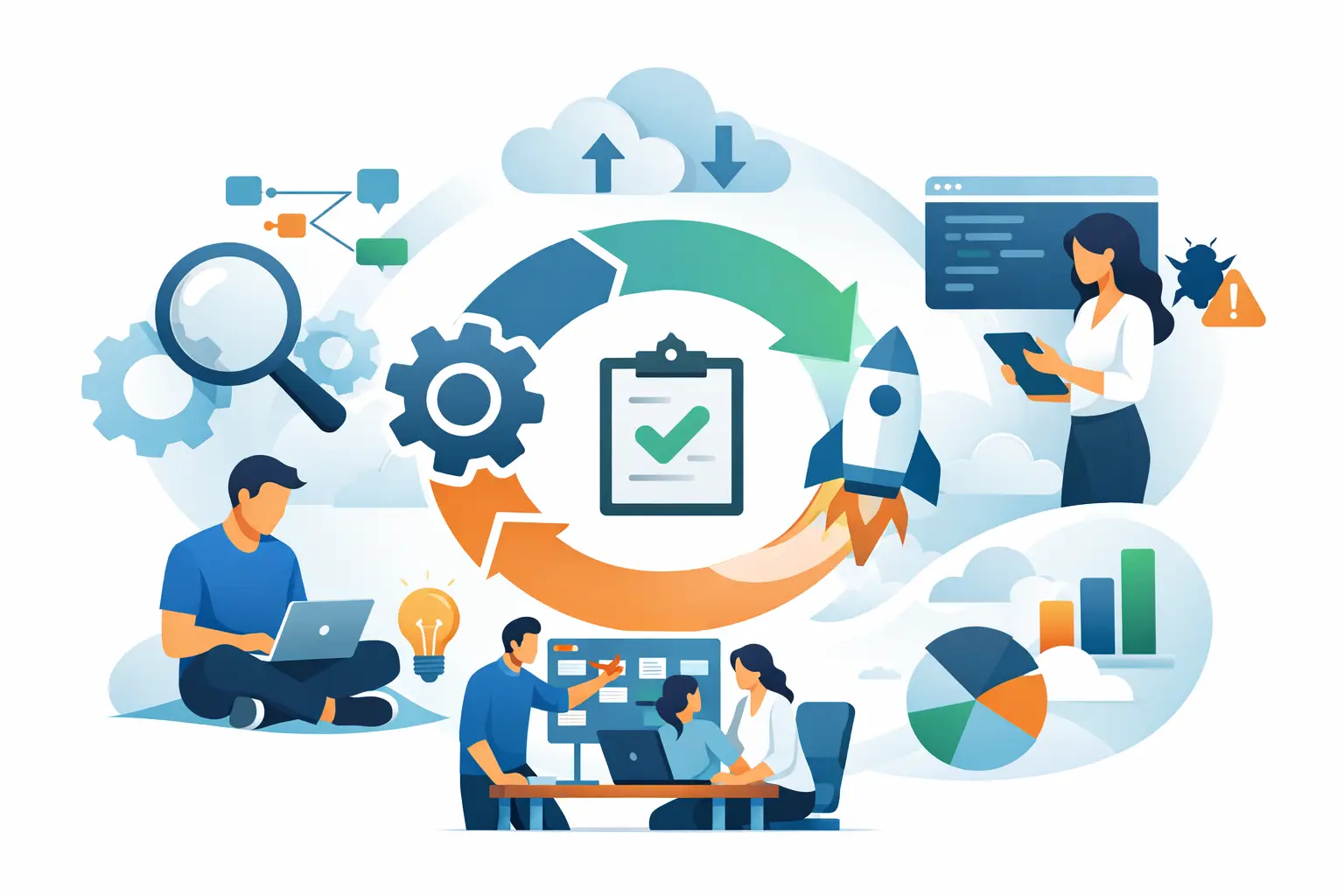
A payroll configuration fix, a security patch, a new Fiori app, and a finance enhancement can all arrive as “urgent.” The difficult part of how to prioritize SAP changes is not collecting requests. It is making transparent decisions when every request has a business sponsor, technical dependencies, and potential operational consequences. A disciplined prioritization model turns that pressure into an actionable change backlog.
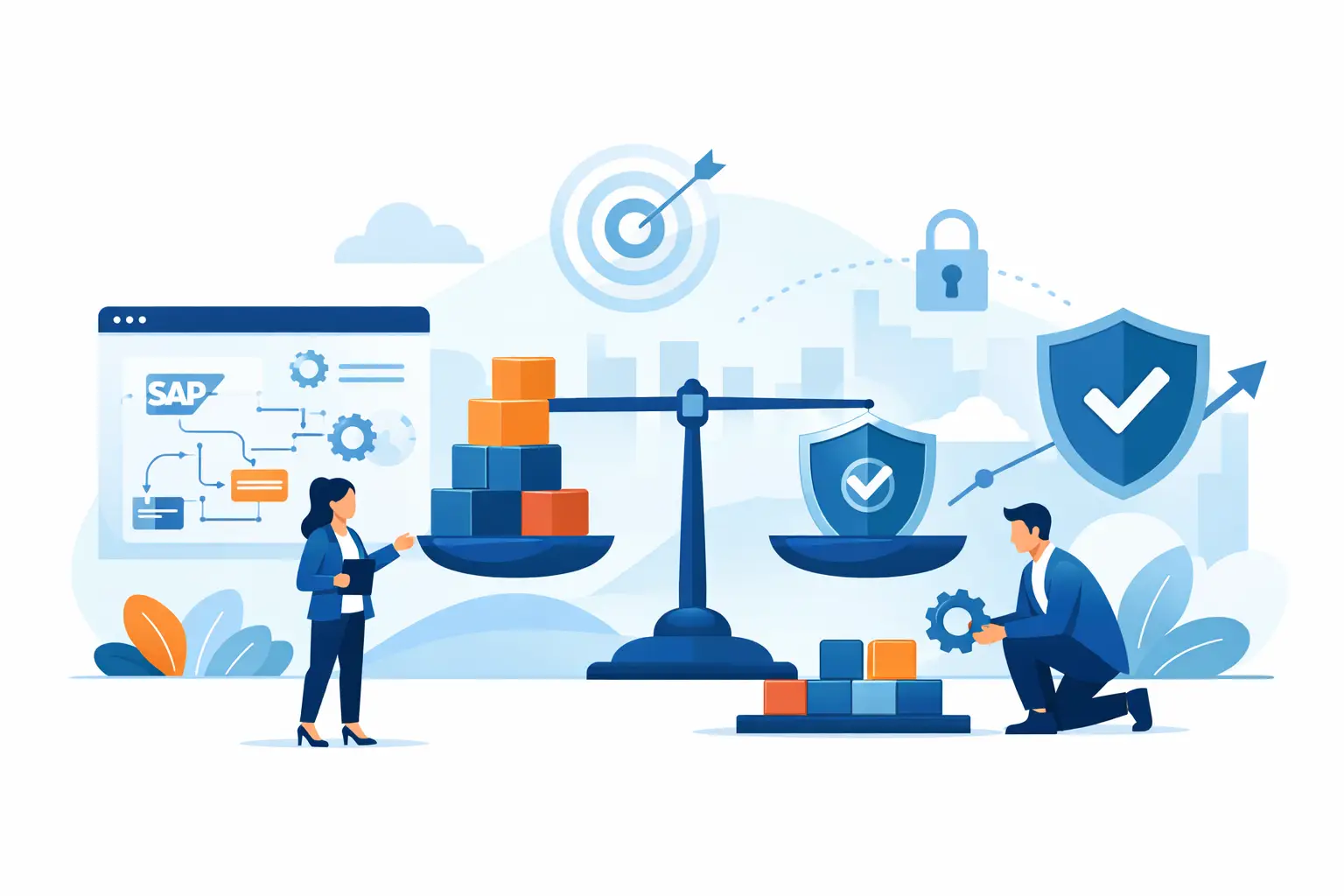
For SAP-driven organizations, priority must reflect more than the loudest request or the nearest project deadline. It must balance business value, risk reduction, regulatory exposure, customer impact, technical readiness, and the capacity of the teams responsible for delivery. SAP Cloud ALM provides the governance structure and visibility to make those decisions consistently across implementation and operations.
Why SAP Change Prioritization Breaks Down
Most prioritization problems begin before a change reaches the approval board. Requests often arrive with incomplete business cases, unclear ownership, or no assessment of affected processes and integrations. A small configuration adjustment in SAP S/4HANA may affect interfaces, authorizations, reporting, downstream applications, and established operating procedures.
The other common issue is treating all changes as one backlog. Emergency production remediation should not compete directly with planned process improvements. Similarly, a mandatory legal update requires a different decision path than an enhancement that improves user productivity. Combining these requests without classification creates unnecessary debate and makes true urgency harder to see.
Cloud transformation adds another layer. Release schedules, SAP-delivered updates, integration changes, and evolving business processes can create a continuous stream of work. The goal is not to eliminate change. It is to establish enough control that the organization can deliver the right changes at the right time without placing operations at unnecessary risk.
How to Prioritize SAP Changes With a Risk-Based Model
Start by placing every request into a consistent intake process. The request should state the business problem, requested outcome, process owner, affected SAP landscape, target date, and known dependencies. This is not bureaucracy for its own sake. It gives the team the minimum information needed to compare one request fairly with another.
Then classify the change. A practical model separates emergency fixes, mandatory changes, risk-reduction changes, planned enhancements, and technical improvements. Classification establishes the first level of priority and prevents a routine enhancement from being presented as a production emergency simply because a stakeholder wants a faster outcome.
Apply clear decision criteria
Once classified, evaluate each non-emergency request against the same criteria. A simple scoring method is often more effective than a complex formula that no one trusts. The objective is to support sound judgment, not replace it.
| Criterion | What the team should assess | | — | — | | Business impact | Revenue, cost, customer service, employee productivity, or strategic program impact | | Operational risk | Likelihood and consequence of process disruption if the change is delayed or introduced poorly | | Compliance and security | Legal, audit, data protection, security, or contractual obligations | | Urgency | A fixed deadline, release dependency, business event, or time-sensitive opportunity | | Effort and readiness | Delivery effort, test scope, skills, environment availability, and dependency status |
Assign a defined score range, such as one through five, to each criterion. Weighting matters. Compliance and production stability may deserve a higher weight in a regulated organization, while a business undergoing a major S/4HANA transformation may give more weight to strategic program dependencies. The model should reflect the organization’s risk appetite rather than impose a generic formula.
A high business-value request is not automatically a top priority if the design is incomplete, dependent teams are unavailable, or testing cannot be completed safely. Conversely, an apparently low-value technical change may move ahead when it removes a material security exposure or prevents a known operational failure. The scoring conversation is where those trade-offs become visible.
Separate priority from scheduling
Priority answers what should be addressed first. Scheduling answers when it can be delivered safely. These are related, but they are not the same decision.
For example, a critical finance enhancement may rank highly but still need to wait for a release window after quarter-end close. A security correction may be urgent, yet require focused regression testing because of its impact on role design and integrations. The change authority should communicate both decisions clearly: the request is important, and its delivery date must protect business continuity.
This distinction also helps manage stakeholder expectations. A prioritized backlog without realistic capacity and release planning becomes a list of promises. Using SAP Cloud ALM to coordinate requirements, tasks, test execution, and deployment readiness gives program leaders a more reliable basis for setting dates.
Build a Change Governance Path That Teams Will Use
A prioritization model fails if decisions sit in spreadsheets, inboxes, or informal meetings. Establish a clear path from request to production, with named accountability at each stage. The process should be lightweight for low-risk work and more rigorous for changes with broad business impact.
A practical governance path includes intake and classification, impact assessment, prioritization, approval, build and test, deployment approval, and post-implementation review. Not every request needs the same depth of review. Standard, repeatable changes can follow a pre-approved route, while major changes should receive fuller architecture, security, and business-process assessment.
The key is to define decision rights. Business owners should validate value and process impact. SAP functional and technical leads should assess solution fit, dependencies, and effort. Security and compliance teams should weigh in when their domains are affected. Operations teams should confirm monitoring, support readiness, and the production window. A change manager or governance lead brings those inputs into a decision that is documented and traceable.
SAP Cloud ALM can support this discipline by creating a shared operational record for requirements, deployment activities, testing, defects, and monitoring context. When teams work from a common source of information, prioritization discussions move away from opinion and toward evidence.
Use Production Signals to Reprioritize Intelligently
A backlog should not be fixed once it has been approved. Production data may reveal that a lower-ranked issue is creating repeated incidents, poor response times, failed jobs, or user workarounds. Those signals deserve attention because they indicate actual operational impact rather than assumed impact.
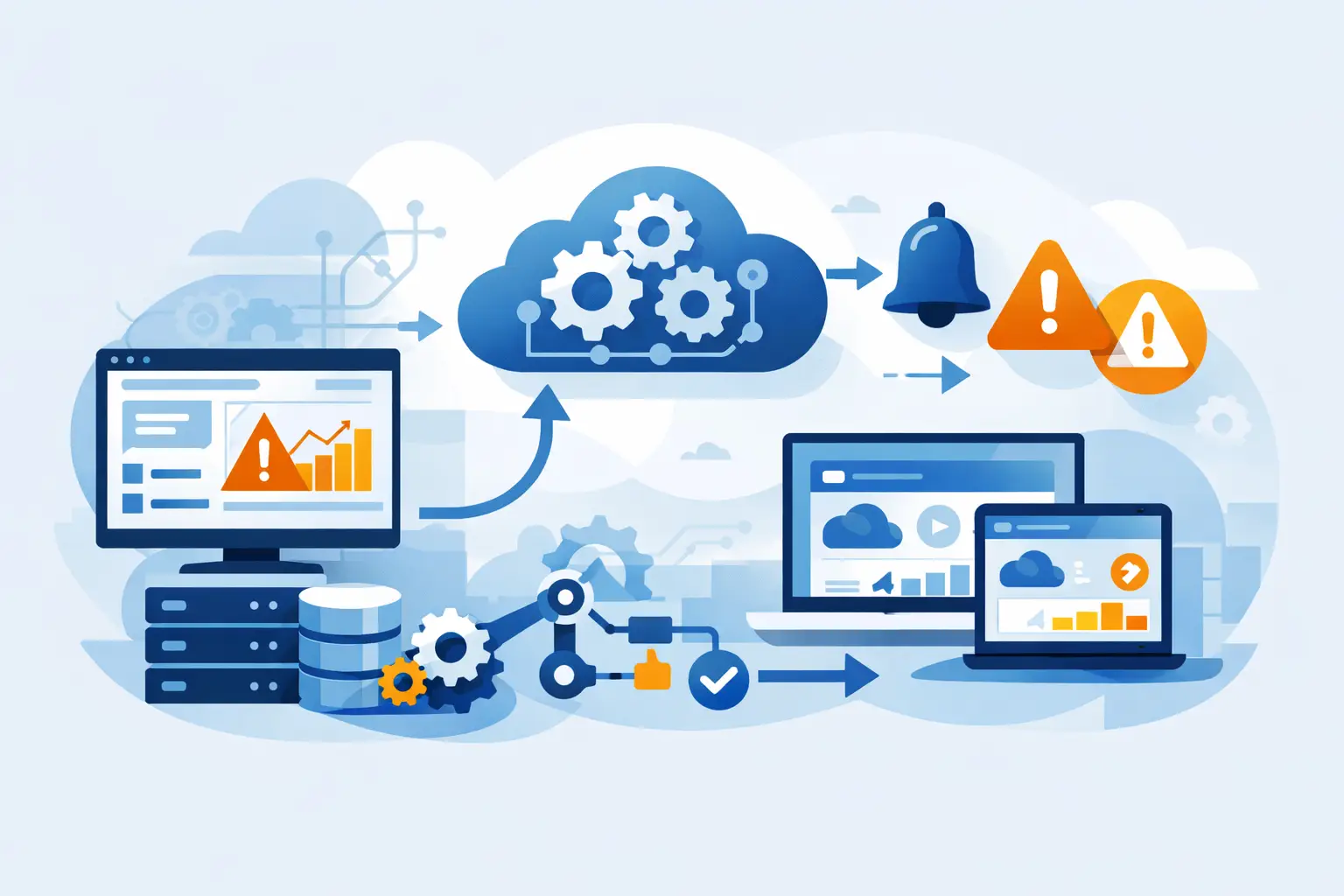
Connect change prioritization with application and business process monitoring. If an interface failure affects order processing, or a recurring job delay impacts financial close, the associated corrective change may need to move ahead of planned enhancement work. Monitoring also helps teams confirm whether a recently deployed change delivered the intended outcome or introduced new instability.
This is particularly valuable when organizations manage hybrid landscapes. The impact of a change may cross SAP and non-SAP systems, cloud services, integrations, and analytics platforms. Prioritization should account for the full service path, not only the SAP component where the request originated.
Avoid the Common Priority Traps
The first trap is allowing executive sponsorship to replace assessment. Senior sponsorship should clarify strategic importance, but it does not remove the need for impact analysis, test planning, and deployment controls. A visible sponsor can accelerate decisions without bypassing governance.
The second is over-prioritizing technical debt until business improvements disappear from the roadmap. Technical health matters, especially where it affects security, availability, or delivery speed. Still, the portfolio needs a deliberate balance between resilience work and changes that create measurable business value.
The third is using severity labels inconsistently. If every ticket is marked high priority, priority has no meaning. Define examples for each category, train requestors, and challenge unsupported urgency at intake. This preserves fast handling for the changes that genuinely require it.
Finally, do not measure the process only by the number of changes deployed. Track decision lead time, emergency-change volume, change failure rate, test completion, incident recurrence, and business outcomes. These measures show whether prioritization is reducing operational risk while enabling transformation work to move forward.
Make Prioritization a Repeatable Operating Capability
The strongest SAP organizations do not rely on a single change advisory meeting to maintain control. They establish a cadence: frequent review for emergencies and near-term work, regular portfolio review for planned demand, and periodic reassessment of scoring weights, capacity, and release performance.
This cadence gives leaders a way to address immediate operational needs without losing sight of longer-term transformation objectives. It also creates a feedback loop between implementation teams and operations teams, which is essential as Cloud ALM adoption matures.
CloudALMexperts helps SAP organizations put this model into practice through structured Cloud ALM implementation, operational enablement, monitoring, and governance support. The right framework is tailored to the organization’s landscape, delivery model, and risk profile. When every proposed change has a clear value case, risk view, owner, and delivery path, prioritization becomes less of a negotiation and more of a dependable operating decision.