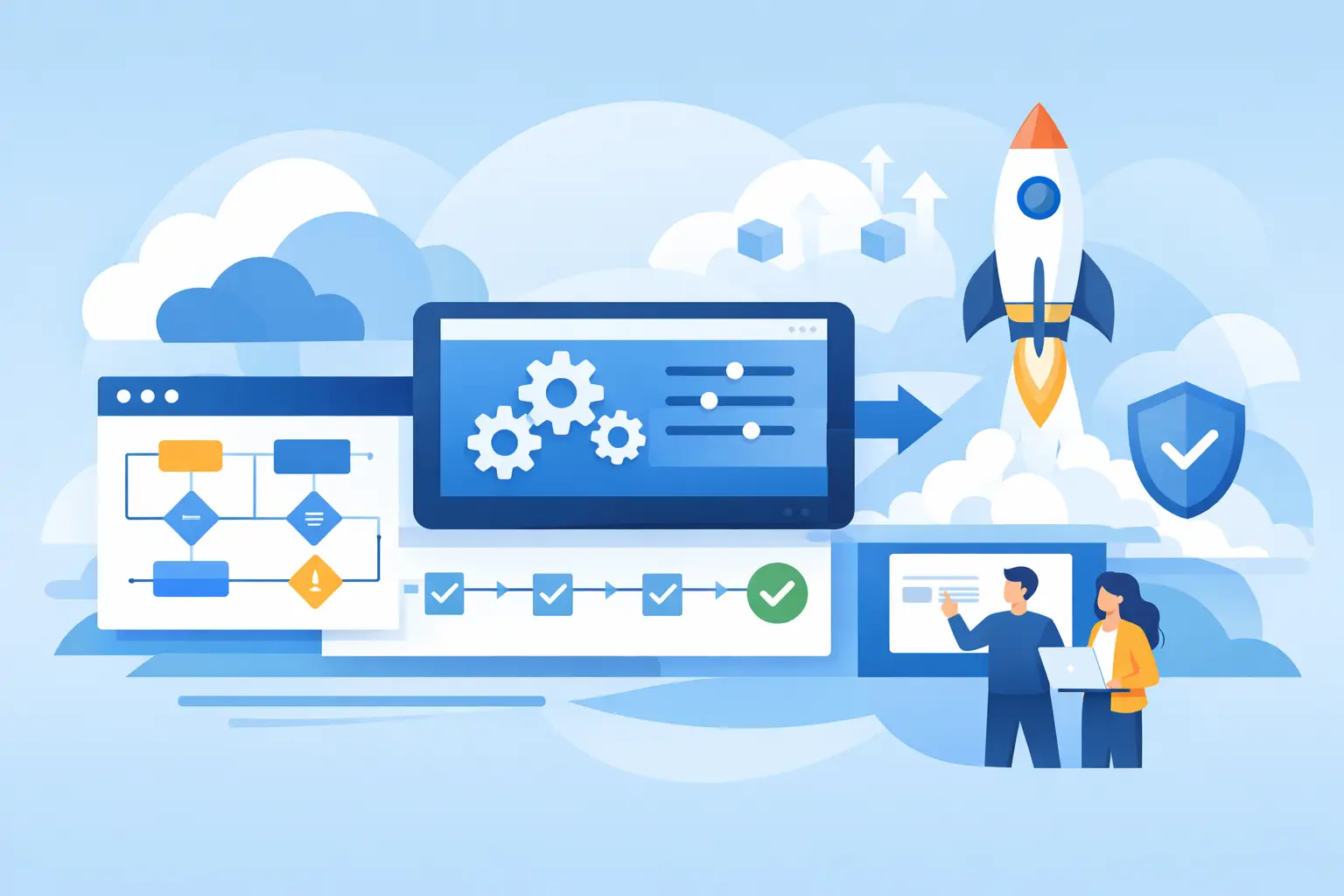
A release can look ready in a project status meeting and still create operational risk. A configuration adjustment may be approved in a workstream, a transport may be technically available, and testing may be marked complete – yet no one can confidently explain the business impact, deployment timing, or rollback path. That is the gap that SAP Cloud ALM change control must close.
For SAP organizations managing cloud transformation, change control is not a paperwork exercise. It is the operating discipline that connects demand, design decisions, test evidence, approvals, deployment activity, and post-release accountability. When that discipline is inconsistent, programs face delayed releases, difficult audits, avoidable production incidents, and friction between project and operations teams.
Why SAP Cloud ALM Change Control Matters
SAP landscapes rarely change in isolation. A modification to a business process, integration, role, interface, or configuration object can affect finance, supply chain, security, reporting, and support procedures at the same time. The technical change may be small. Its operational consequence may not be.
SAP Cloud ALM provides a practical foundation for organizing implementation work, requirements, tasks, testing, deployment readiness, and operational visibility. The value comes from designing a change-control model around how the organization actually delivers change, rather than treating the platform as a set of disconnected features.
A well-designed model answers five questions for every material change: What is changing? Why is it needed? Who has assessed and approved it? What evidence shows it is ready? How will the organization respond if the release does not perform as expected?
The right level of control depends on the risk. A routine, low-impact correction should not face the same approval path as a change to tax determination, order-to-cash integration, or a critical security role. Standardizing this distinction prevents governance from becoming either a bottleneck or an afterthought.
Build the Control Model Before Configuring the Tool
The most common mistake is beginning with workflows and fields before agreeing on decision rights. Technology can support a control process, but it cannot resolve uncertainty about who owns the risk decision.
Start by defining change categories that reflect the organization’s SAP delivery reality. Many teams distinguish between standard changes, normal changes, emergency changes, and major releases. The labels matter less than the criteria. A standard change should be repeatable, pre-authorized, and low risk. A normal change requires assessment and planned approval. Emergency change handling needs speed, but it still requires a documented reason, accountable authorization, and a retrospective review. Major releases need coordinated readiness across business, technical, security, and support stakeholders.
Next, set clear ownership. The requestor describes the business need. The functional or technical owner assesses scope. Test leads confirm evidence. A release manager coordinates readiness. Business owners accept process risk. Operations teams confirm support readiness. In smaller organizations, one person may hold several roles. The accountability should still be explicit.
Define the minimum evidence for each change
Every change does not need a lengthy dossier, but every material change needs enough evidence to support a defensible decision. For planned changes, that normally includes the requirement or defect reference, impact assessment, affected systems or processes, test results, approval record, deployment window, communication plan, and rollback or remediation approach.
This evidence should be proportionate. Requiring a full rollback plan for a minor documentation update adds little value. Releasing a critical integration change without a verified recovery path creates unnecessary exposure. Mature teams use risk criteria to determine the depth of analysis, test coverage, and approval required.
Connect Requirements, Testing, and Release Decisions
Change control breaks down when requirements, test management, and deployment planning live in separate conversations. A requirement approved by the business is not automatically ready for production. It must be built, validated, and assessed in the context of the target release.
SAP Cloud ALM can help teams establish traceability across these activities. The practical objective is straightforward: a release decision should be based on evidence, not assumptions. Release stakeholders need to see which requirements are included, which tests have passed or failed, which defects remain open, and whether exceptions have been explicitly accepted.
A useful release-readiness review does not simply ask, “Are we done?” It asks more precise questions. Are all critical business scenarios tested? Are unresolved defects understood and accepted by the correct owner? Have interfaces, roles, data dependencies, and operational procedures been considered? Is the release scope stable enough to deploy safely?
Where evidence is incomplete, the decision should be visible. Teams sometimes release with known issues because the business value of meeting a date outweighs the residual risk. That can be a valid decision. What creates problems is allowing the exception to remain informal, without named ownership or a follow-up action.
Treat testing as control evidence, not a project milestone
Testing often becomes compressed near a deadline, particularly when teams are managing multiple workstreams or dependencies on external providers. The answer is not merely to demand more testing. It is to identify which tests demonstrate readiness for the specific risk being introduced.
For example, a new Fiori application may require functional validation, authorization testing, device considerations, and support documentation. An interface change may require end-to-end volume testing, failure handling, monitoring validation, and confirmation that support teams can identify and resolve exceptions. The test approach should reflect the change, not follow a generic checklist.
Make Approval Meaningful and Timely
Approvals are valuable only when approvers have the information and authority needed to make a decision. A long chain of generic approvals may appear controlled, but it often produces delays without improving accountability.
Define approval gates around real decisions. Business approval should confirm that the intended outcome and process impact are understood. Technical approval should confirm solution quality, dependencies, and deployment feasibility. Security approval should focus on relevant access or compliance exposure. Operations approval should confirm monitoring, support, and service readiness.
Approval timing also matters. If stakeholders first see release scope on the day of deployment, the process is already reactive. Establish predictable checkpoints during design, test completion, and release readiness. This gives teams time to address concerns before they become escalation points.
For emergency changes, approval processes need a separate path. The goal is not to bypass governance. It is to record why expedited action was necessary, who authorized it, what validation occurred, and whether a post-implementation review is required. This protects both service continuity and auditability.
Align Change Control With Operational Readiness
A successful deployment is not the same as a successful change. Production support teams need to know what changed, how it should behave, which monitoring signals matter, and where to begin if users report an issue.
This is where SAP Cloud ALM for Operation becomes part of the control model. Monitoring requirements, business process health, integration visibility, and alert ownership should be considered before production deployment, not added after the first incident. A release that introduces a new interface without confirming monitoring and escalation ownership has transferred risk to operations.
Operational readiness should cover four practical areas:
- Support teams understand the new or changed process and have current procedures.
- Monitoring and alerting are configured for material interfaces, jobs, exceptions, and performance indicators.
- Service ownership and escalation contacts are confirmed for the release window.
- Early-life support includes a defined review period, success measures, and a process for handling defects.
The depth of this preparation depends on the release. A major transformation wave may need a formal hypercare structure and daily readiness reviews. A small, low-risk change may only need a concise handover to the support team. The key is making the decision intentional.
Measure Whether the Process Is Working
Change control should improve delivery performance, not simply create records. Track measures that reveal whether the process is reducing risk and improving predictability. Useful indicators include change success rate, emergency change volume, failed deployment causes, approval cycle time, defect leakage into production, and the percentage of releases with complete evidence.
Look beyond the numbers. A low emergency-change rate may indicate good planning, or it may indicate that teams are misclassifying urgent work. Fast approvals may reflect efficient governance, or approvers may be approving without review. Metrics need context from release managers, project leads, and operations teams.
Periodic review is essential because delivery models change. As SAP programs move from implementation into steady-state operation, the risk profile, release cadence, and support responsibilities change with them. Governance should evolve accordingly.
CloudALMexperts helps SAP organizations translate these principles into a practical Cloud ALM operating model, from initial process design and configuration through team enablement and operational adoption. The aim is not more control for its own sake. It is clearer decisions, stronger evidence, and releases that operations teams can support with confidence.
The most useful next step is to examine one recent release – especially one that was delayed, required emergency remediation, or created support disruption. Follow its path from request through production. The gaps in ownership, evidence, approvals, or handover will show exactly where your change-control model needs attention.