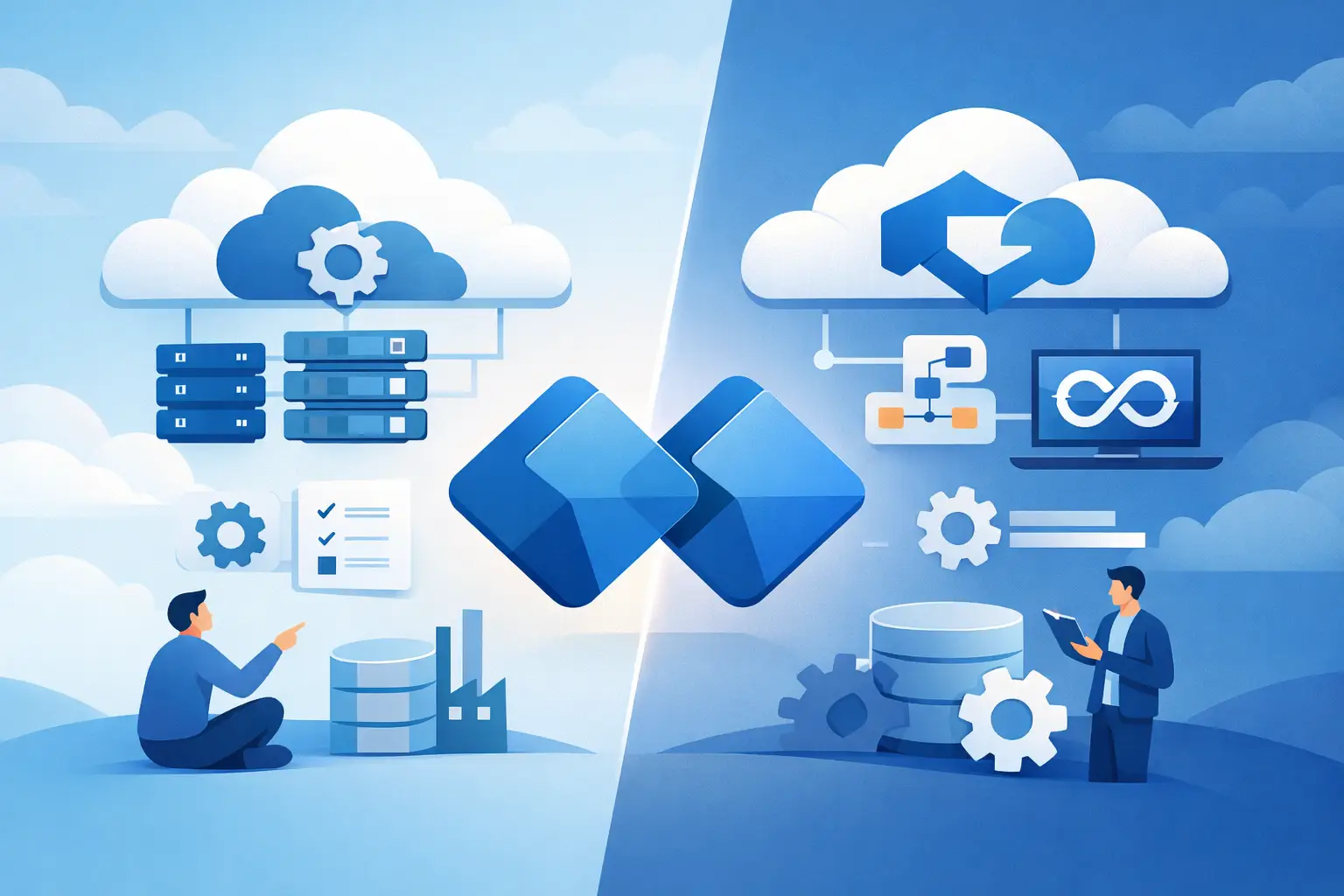
If your SAP roadmap still includes Solution Manager while new programs are being pushed into cloud-first delivery, the sap cloud alm vs solution manager question is no longer theoretical. It affects implementation governance, monitoring coverage, operational effort, and how quickly teams can adapt to ongoing SAP change.
For many organizations, this is not a simple product comparison. It is a transition decision. Some teams need to support complex on-premise landscapes today while preparing for SAP S/4HANA Cloud, SAP SuccessFactors, SAP Integration Suite, and broader hybrid operations tomorrow. The right answer depends on where your estate is now, what SAP solutions you are running, and how much process and tool redesign your teams can absorb.
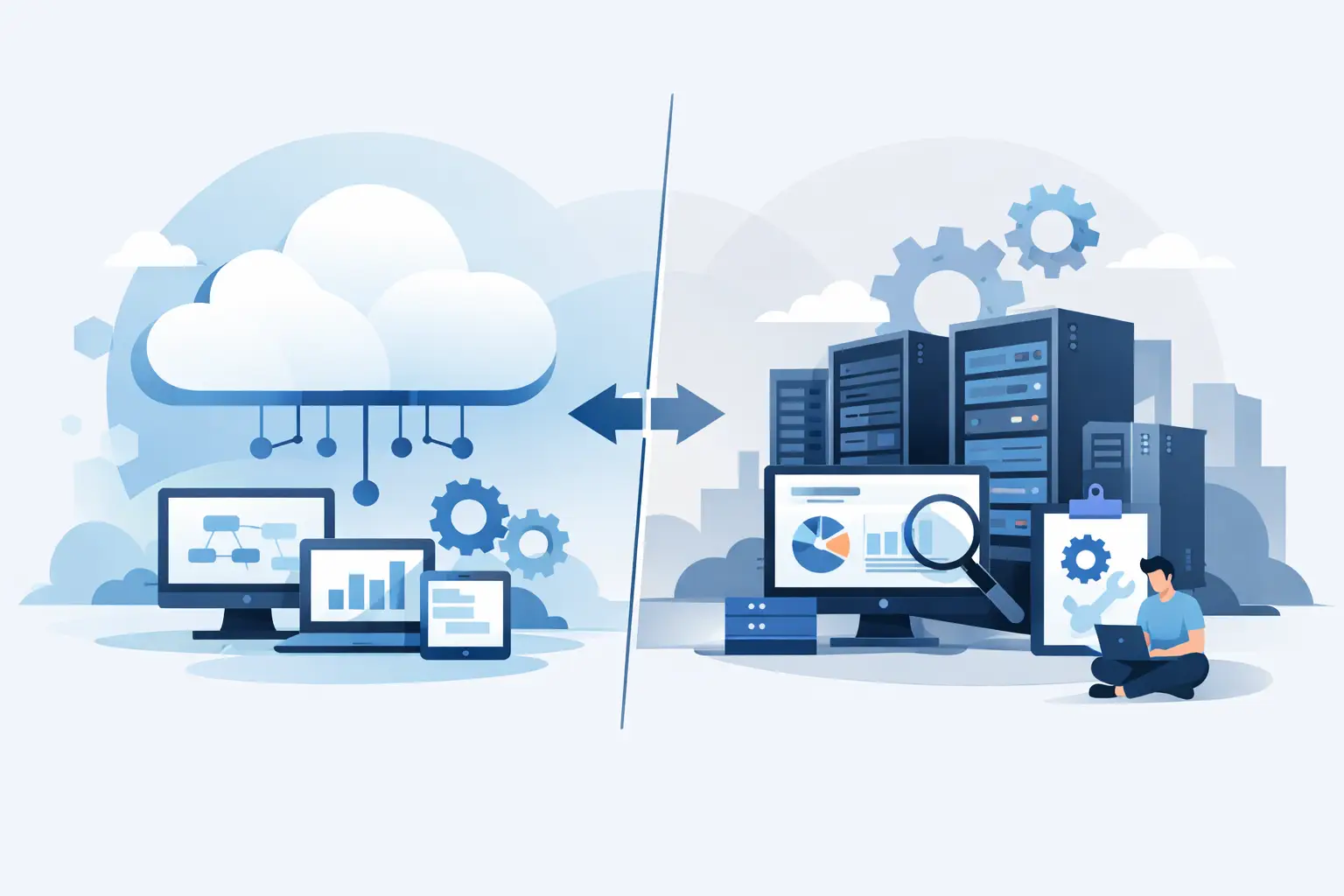
SAP Cloud ALM vs Solution Manager: the core difference
At a high level, Solution Manager was built for a different SAP era. It was designed to support traditional SAP landscapes with strong emphasis on on-premise administration, documentation, testing, monitoring, and IT service management in customer-managed environments.
SAP Cloud ALM is built for cloud-centric lifecycle management. It is intended to support implementation and operations for SAP cloud solutions and hybrid landscapes, with a lighter operating model and a stronger fit for organizations standardizing around SAP’s newer cloud services.
That does not mean SAP Cloud ALM is simply a newer version of Solution Manager. It is not a one-to-one replacement in every functional area. This is where many projects lose time. Leaders assume feature parity, then realize late in the program that some established SolMan processes do not map directly, or that their teams need a new operating model rather than a technical migration alone.
Where Solution Manager still makes sense
Solution Manager can still be the practical choice in environments with deep on-premise complexity. If your organization relies heavily on mature ChaRM processes, extensive custom monitoring, established ITSM workflows, or tightly embedded documentation and testing practices built over years, replacing it overnight is rarely wise.
This matters especially for enterprises running ECC, Business Suite, or large customized SAP estates where Solution Manager is not just a tool but part of operational governance. In those cases, the cost of changing process, retraining teams, and redesigning integrations may outweigh the short-term benefit of moving fast.
There is also a skills reality. Some SAP operations teams know SolMan well and have built stable routines around it. If business continuity is the top priority, keeping Solution Manager in place during a phased transformation can be the lower-risk decision.
Where SAP Cloud ALM has a clear advantage
SAP Cloud ALM is strongest when the target state is cloud-led and the organization wants a simpler, more focused ALM approach. It aligns well with SAP cloud implementations, fit-to-standard programs, guided task management, deployment tracking, health monitoring, integration monitoring, and business process monitoring that support modern SAP delivery models.
For implementation teams, SAP Cloud ALM can bring more structure without the overhead that often came with maintaining a larger SolMan footprint. For operations teams, it offers a cleaner path to monitor cloud services, integrations, and key business processes in a way that fits SAP’s current direction.
That is why many organizations now treat SAP Cloud ALM as the strategic platform, even when Solution Manager remains active during transition. The question shifts from which product is better in the abstract to which one fits the future-state operating model.
Implementation and project delivery
In implementation scenarios, the sap cloud alm vs solution manager comparison usually favors SAP Cloud ALM for net-new cloud programs. It supports requirements, fit-to-standard activities, task tracking, test preparation, defect handling, and deployment coordination in a model that is easier to align with cloud implementation methods.
Solution Manager can still support implementation governance, particularly where teams already have mature templates and internal controls built around it. But many organizations find that carrying forward old implementation mechanics into a cloud program adds friction. The process becomes heavier than it needs to be.
A cloud implementation usually benefits from speed, standardization, and clearer accountability. SAP Cloud ALM fits that pattern better. It encourages teams to work within a more current delivery framework instead of recreating legacy ALM habits in a new project.
Operations, monitoring, and support
Operations is where the decision gets more nuanced. Monitoring needs are rarely uniform across the landscape. A company may have SAP S/4HANA Cloud, SAP Ariba, SAP BTP integrations, legacy ECC interfaces, and non-SAP dependencies all at once. No single answer works for every mix.
SAP Cloud ALM is especially relevant for organizations that need visibility into cloud services, integrations, jobs, automation status, and business process health with less administrative burden. It can support a more proactive operations model, particularly when teams want focused dashboards and clearer alert handling across cloud-heavy environments.
Solution Manager may still retain value where established on-premise monitoring scenarios are deeply customized or where support teams depend on mature historical processes that have not yet been redesigned. If your operations model is tightly tied to those capabilities, moving too quickly can create gaps.
This is why transition planning matters more than product preference. A strong ALM strategy looks at monitoring use cases one by one, identifies what should remain, what should move, and what should be redesigned entirely.
Process maturity matters more than product marketing
One of the most common mistakes in this discussion is treating the tool as the strategy. It is not. If your incident handling is inconsistent, your implementation governance is fragmented, or your monitoring model is spread across disconnected teams, changing platforms will not fix the operating problem by itself.
The better question is this: what lifecycle disciplines do you actually need to run SAP effectively over the next three to five years? Once that is clear, the tool decision becomes easier.
Organizations that get value from SAP Cloud ALM usually do three things well. They define clear ownership across implementation and operations, they align use cases with actual SAP products in scope, and they invest in enablement so teams know how to use the platform in daily work.
A realistic transition path
For most enterprises, this is not an either-or switch. It is a staged transition.
A common pattern is to keep Solution Manager supporting existing on-premise processes while introducing SAP Cloud ALM for new cloud implementations and selected operations use cases. Over time, the organization evaluates which SolMan capabilities still serve a purpose and which ones should be retired, replaced, or simplified.
This phased model reduces risk. It also gives teams room to validate monitoring coverage, redesign governance, and train functional and technical users without forcing a disruptive cutover. In practice, the most successful transitions are deliberate. They start with business priorities, not tool ideology.
How to choose between SAP Cloud ALM and Solution Manager
If your SAP estate is becoming more cloud-centric, your delivery model is shifting toward standardization, and your teams want a more current ALM foundation, SAP Cloud ALM is usually the strategic direction. If your environment is still heavily on-premise, your SolMan processes are deeply embedded, and operational stability depends on them, Solution Manager may remain necessary for a period of time.
The key is to avoid two extremes. Do not cling to Solution Manager just because it is familiar, and do not adopt SAP Cloud ALM assuming every legacy process should transfer as-is. Both decisions create unnecessary cost and confusion.
A focused assessment of implementation, operations, monitoring, service processes, and administration will usually show the right path. In many cases, that path includes both platforms for a while, with clear boundaries and a roadmap toward simplification. That is where specialist guidance helps. Firms such as CloudALMexperts support organizations through planning, adoption, administration, and operational rollout so the move to SAP Cloud ALM produces measurable value instead of another half-finished tool change.
The best ALM decision is the one that supports your next SAP chapter without weakening today’s control. If you approach the shift with that discipline, the platform choice becomes far clearer.