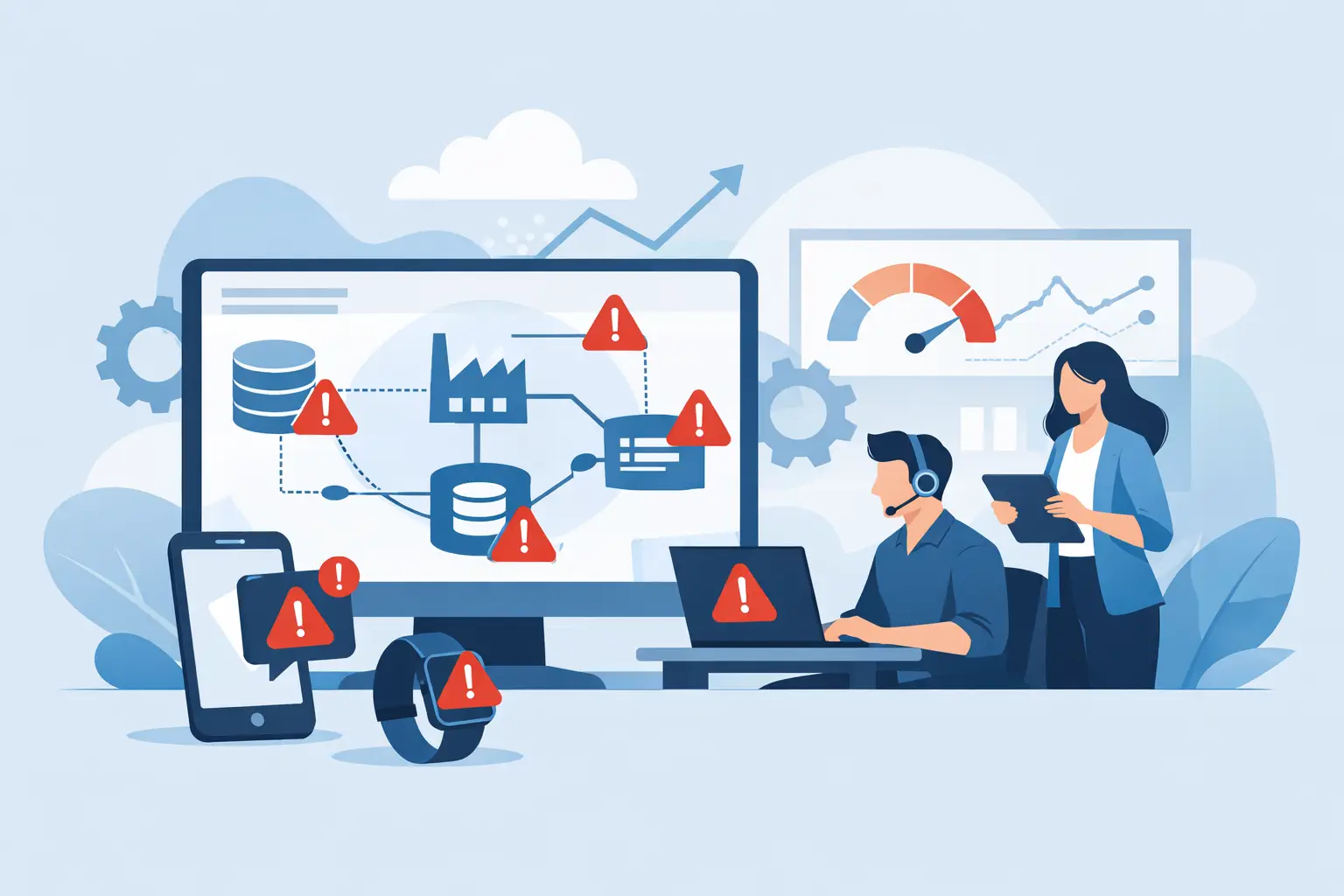
A failed purchase-order message at 2:00 a.m. is rarely just a technical event. It can hold up a supplier confirmation, delay a shipment, create manual work for finance, or leave customer service without an answer. An effective SAP integration monitoring strategy makes those connections visible early, gives the right team a clear response path, and reduces the time between failure detection and business recovery.
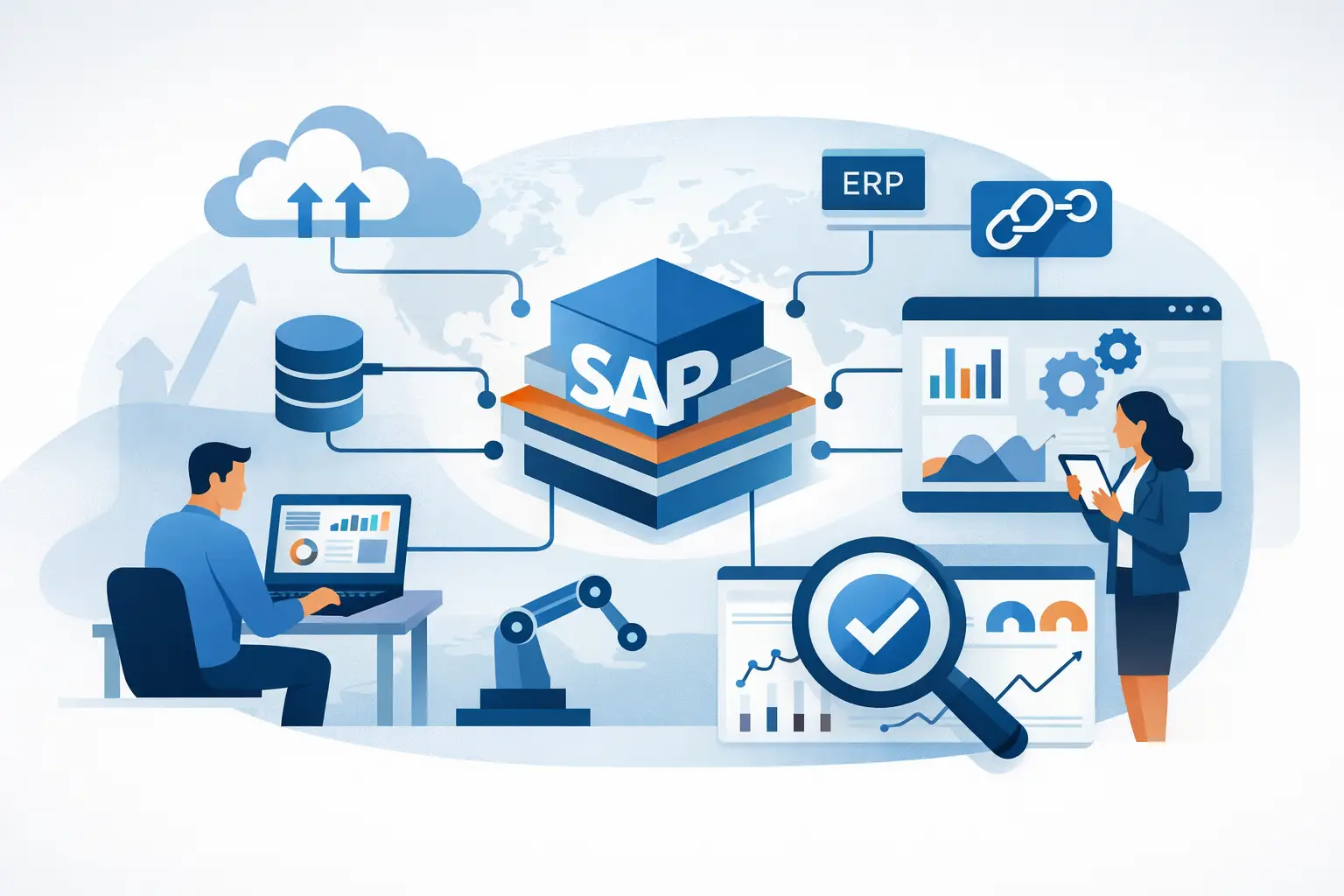
For organizations moving SAP landscapes to the cloud, integration monitoring cannot be treated as a collection of alerts. SAP S/4HANA Cloud, SAP SuccessFactors, SAP Ariba, SAP Concur, SAP Integration Suite, third-party logistics platforms, and custom applications all exchange data across different protocols, teams, and support boundaries. Monitoring must therefore be designed as an operational capability, not configured as a final project task.
What an SAP Integration Monitoring Strategy Must Deliver
The objective is not to generate more notifications. It is to provide dependable answers when an interface is delayed, fails, or behaves unexpectedly: What business process is affected? Which message or transaction failed? Who owns the next action? How urgently does it need to be resolved? Has the process recovered?
A useful strategy connects technical telemetry to business context. A certificate expiration, for example, matters because it may stop invoice transmission to a supplier network. A message backlog matters because order confirmations are not reaching the fulfillment process within an agreed window. This context allows operations teams to prioritize work by impact rather than by whichever alert arrived first.
The right design also depends on the organization. A global enterprise with 24/7 order processing may need strict service-level thresholds, on-call routing, and enterprise service management integration. A mid-sized organization with a smaller support team may benefit more from targeted exception monitoring and clear daily operational routines. Both need visibility. They do not need the same alert volume or operating model.
Build the SAP Integration Monitoring Strategy Around Business Flows
The strongest monitoring programs start with critical business flows, then map the technical integrations that enable them. Beginning with every available interface often creates a large monitoring backlog without establishing what deserves immediate attention.
Identify the processes where delay creates real risk
Start with the processes that have a measurable financial, customer, compliance, or operational consequence. Common examples include order-to-cash, procure-to-pay, hire-to-retire, inventory replenishment, financial close, and regulatory reporting. For each process, define what an unacceptable interruption looks like.
A payment status interface may tolerate a short delay but not a full business day of failure. An inventory update from a warehouse may require a much tighter threshold during peak fulfillment periods. This analysis sets realistic monitoring expectations before technical configuration begins.
Map the integration path and its dependencies
For each priority flow, document the systems involved, the integration technology, message direction, owner, support team, and expected processing window. Include dependencies that can cause failures outside the integration platform itself, such as expired certificates, unavailable endpoints, user authorization changes, API limits, or middleware queue backlogs.
This map should distinguish between business-critical interfaces and lower-priority informational exchanges. It should also show whether an interface is synchronous or asynchronous. A synchronous call typically requires immediate availability monitoring, while an asynchronous flow may need volume, age, and backlog monitoring instead.
Establish service expectations before defining alerts
Every monitored interface needs a practical operating expectation. Define acceptable processing time, expected message volume, failure tolerance, and escalation trigger. Avoid arbitrary thresholds such as alerting on every failed message regardless of business impact.
For a high-volume interface, one failed message may be recoverable without intervention, while a 30-minute backlog may be the meaningful signal. For a monthly payroll integration, a single failure near the cutoff could require immediate action. Thresholds should reflect business timing, not just technical preference.
Design Monitoring for Action, Not Observation
An integration dashboard can show green, yellow, and red status indicators and still leave a team unable to resolve an incident. Monitoring becomes operationally valuable only when each alert leads to a defined action.
Assign ownership at the point of failure
Ownership should be explicit across functional, technical, and platform teams. The SAP operations team may own visibility and initial triage. An integration team may own SAP Integration Suite configuration. A business process owner may validate corrected data or decide whether a message should be reprocessed. External partners may own the receiving endpoint.
Document these handoffs in the monitoring model. If an alert has no named owner, it is not an actionable alert. If a team receives alerts it cannot investigate or resolve, alert fatigue will follow quickly.
Separate symptoms from root causes
One endpoint outage can create hundreds of failed messages. A monitoring strategy that opens an incident for each message overwhelms the support team and obscures the actual problem. Configure correlation where possible, grouping related failures by interface, endpoint, error signature, or shared dependency.
The operational view should reveal the root condition and the accumulated business impact. Teams need to see that a supplier endpoint is unavailable, how many messages are waiting, and whether recovery requires reprocessing. That is more useful than a list of identical technical errors.
Make recovery visible
Detection alone does not complete the operational cycle. Monitoring should confirm when an endpoint returns, when queued messages have been processed, and when the business flow is current again. Without recovery validation, teams may close incidents based on technical availability while business transactions remain incomplete.
For critical flows, define a simple recovery check. It may be a successfully processed test transaction, a cleared message backlog, or confirmation that the latest business document reached its target system. The appropriate method depends on the interface and business process.
Use SAP Cloud ALM as the Operational Foundation
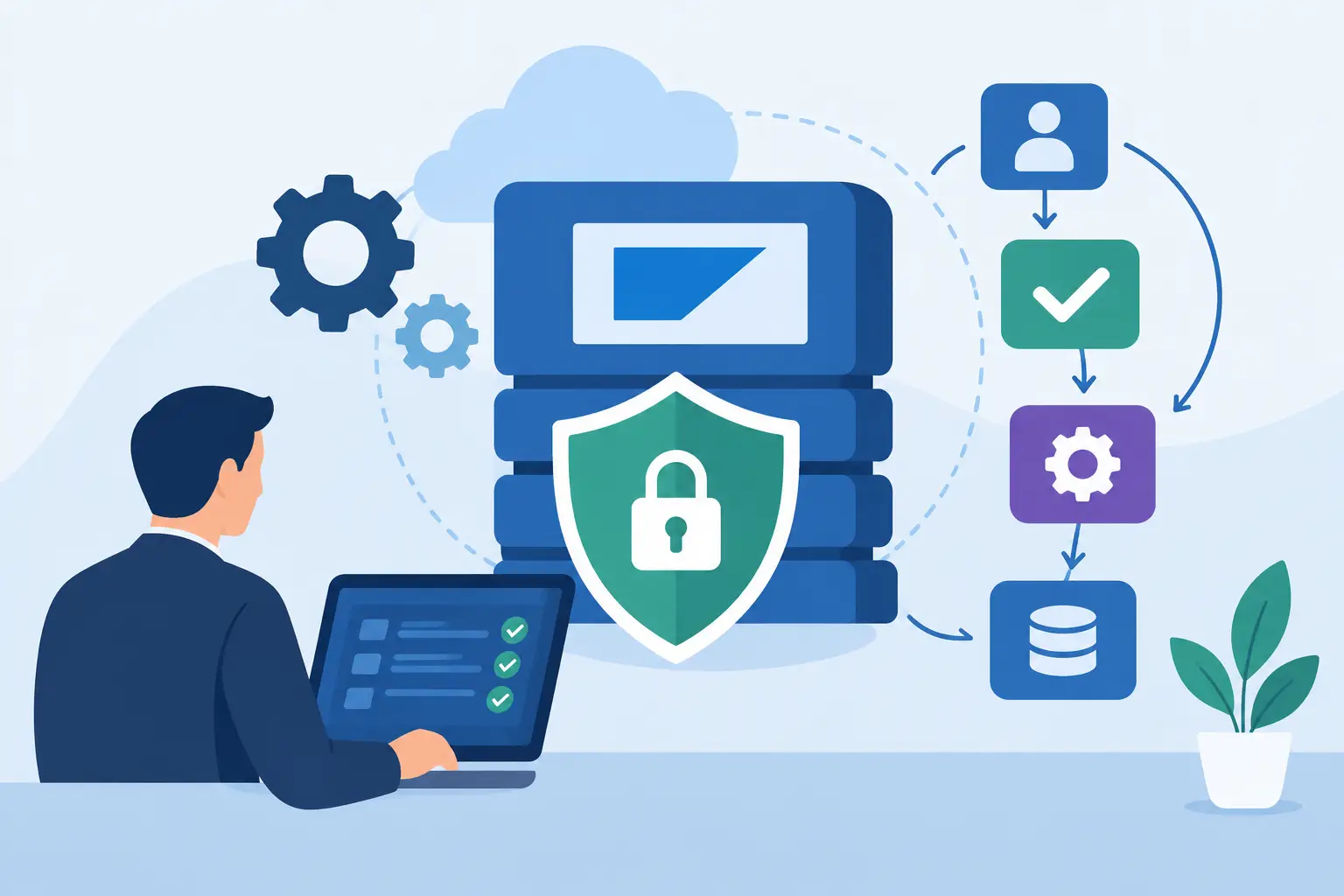
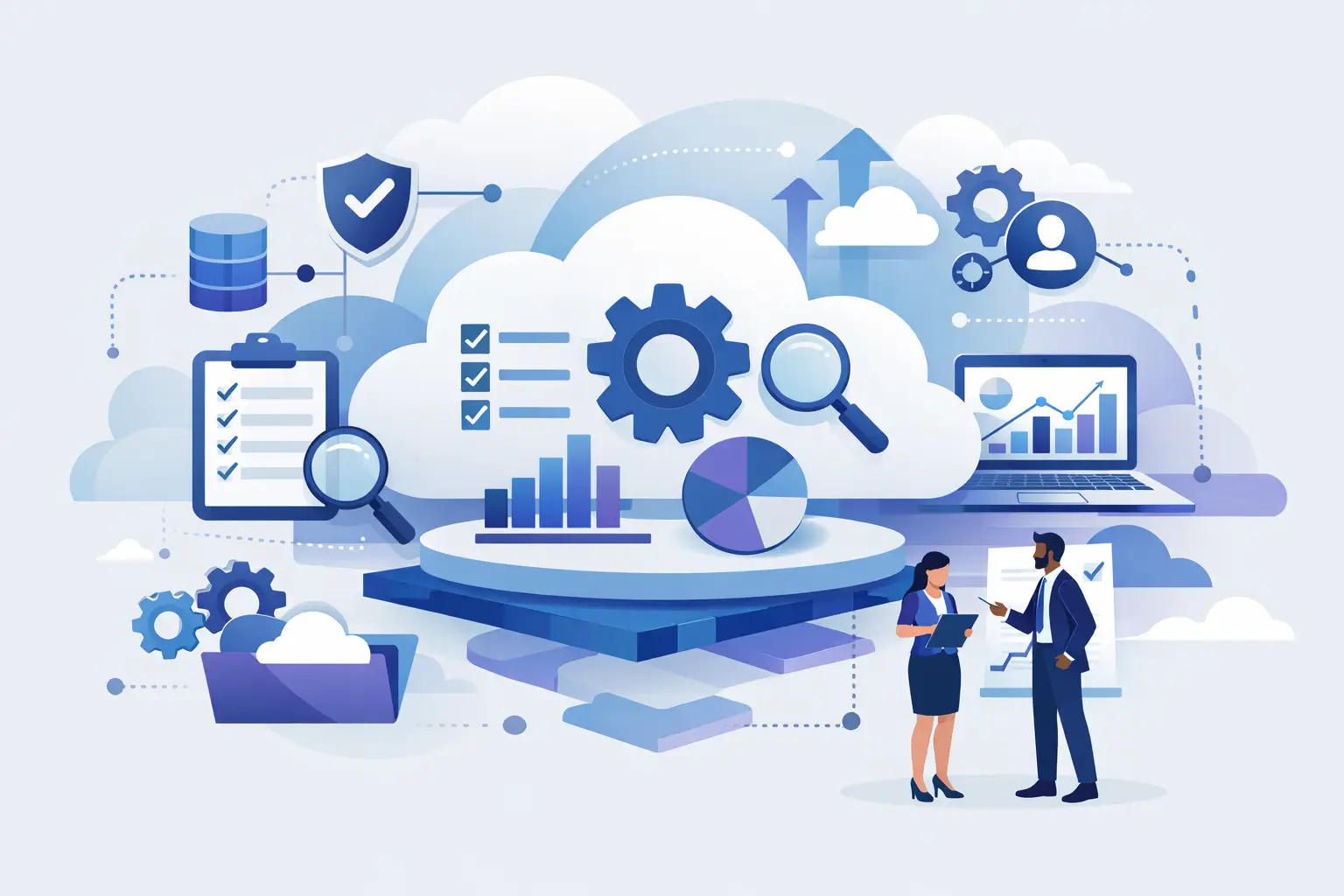
SAP Cloud ALM for Operations provides a focused foundation for monitoring cloud-centric SAP landscapes. Its integration monitoring capabilities can bring message status, exceptions, and integration health into a centralized operational view, reducing the need to search across separate tools during an incident.
Configuration should follow the business-flow priorities established earlier. Begin with the interfaces that support critical processes, set meaningful thresholds, and refine alerting based on real operating behavior. Attempting to monitor every integration with the same depth on day one often slows adoption and produces unnecessary noise.
SAP Cloud ALM should also be positioned within the wider service-management model. Where teams use an IT service management platform, clarify how alerts become incidents, what information transfers with the ticket, and how escalation paths work outside business hours. Where observability tools such as Grafana, SPLUNK, or SAP Analytics Cloud are part of the environment, define their role clearly. They can add executive reporting, cross-platform correlation, or historical analysis, while SAP Cloud ALM remains closely aligned with SAP operations.
Turn Alerts Into Repeatable Incident Response
A mature SAP integration monitoring strategy includes concise runbooks for common failure patterns. The goal is not to document every theoretical issue. It is to help an analyst take the correct first steps without relying on tribal knowledge.
For each critical interface, the runbook should identify the alert meaning, likely causes, initial validation steps, escalation contact, reprocessing approach, and post-recovery check. Keep it close to the team that operates the service and review it after significant incidents. A runbook that has not been tested during real support activity will become unreliable quickly.
Incident reviews should focus on prevention as well as restoration. If the same certificate issue occurs every quarter, the improvement action may be an expiry-monitoring rule and an ownership calendar. If message reprocessing repeatedly requires manual data correction, the underlying mapping or validation logic may need remediation. Monitoring data gives leaders evidence to prioritize these investments.
Measure Whether Monitoring Is Improving Operations
Monitoring maturity is visible in operational outcomes, not in the number of dashboards deployed. Track measures that show whether issues are identified earlier and resolved more predictably. Useful measures include mean time to detect, mean time to restore, failed-message aging, recurring incident rate, backlog duration, and the percentage of critical interfaces with assigned ownership and documented response procedures.
Use these measures carefully. A temporary increase in reported failures may reflect better detection rather than weaker performance. Likewise, reducing alert counts is only positive if material business exceptions are still being identified. The aim is informed operational control, not artificially quiet dashboards.
Governance matters here. Review critical interface coverage, threshold quality, unresolved recurring errors, and changes to business process priorities on a regular cadence. Integration landscapes change continuously as cloud applications, APIs, partners, and release schedules evolve. The monitoring design must change with them.
Avoid the Monitoring Gaps That Create Operational Risk
Several patterns repeatedly weaken integration operations. The first is monitoring only technical availability. An endpoint can be available while messages are failing due to data validation or authorization errors. The second is treating all alerts as equal, which prevents teams from focusing on the flows that affect revenue, customers, or compliance.
Another common gap is excluding business stakeholders from monitoring design. Functional teams understand cutoff times, exception consequences, and recovery priorities that technical teams may not see. Finally, many organizations configure monitoring during implementation but do not establish administration, training, or continuous improvement ownership after go-live. In that model, monitoring gradually loses relevance as the landscape changes.
A specialist-led approach helps convert these risks into an operating model. CloudALMexperts can help organizations define priority business flows, configure SAP Cloud ALM monitoring, establish alert and incident procedures, and enable internal teams to sustain the capability after transition.
The practical next step is to select one high-impact business flow and trace it from source to target. Define what failure looks like, who responds, how recovery is confirmed, and what SAP Cloud ALM should report. Once that model works in daily operations, it becomes a repeatable foundation for the rest of the integration landscape.