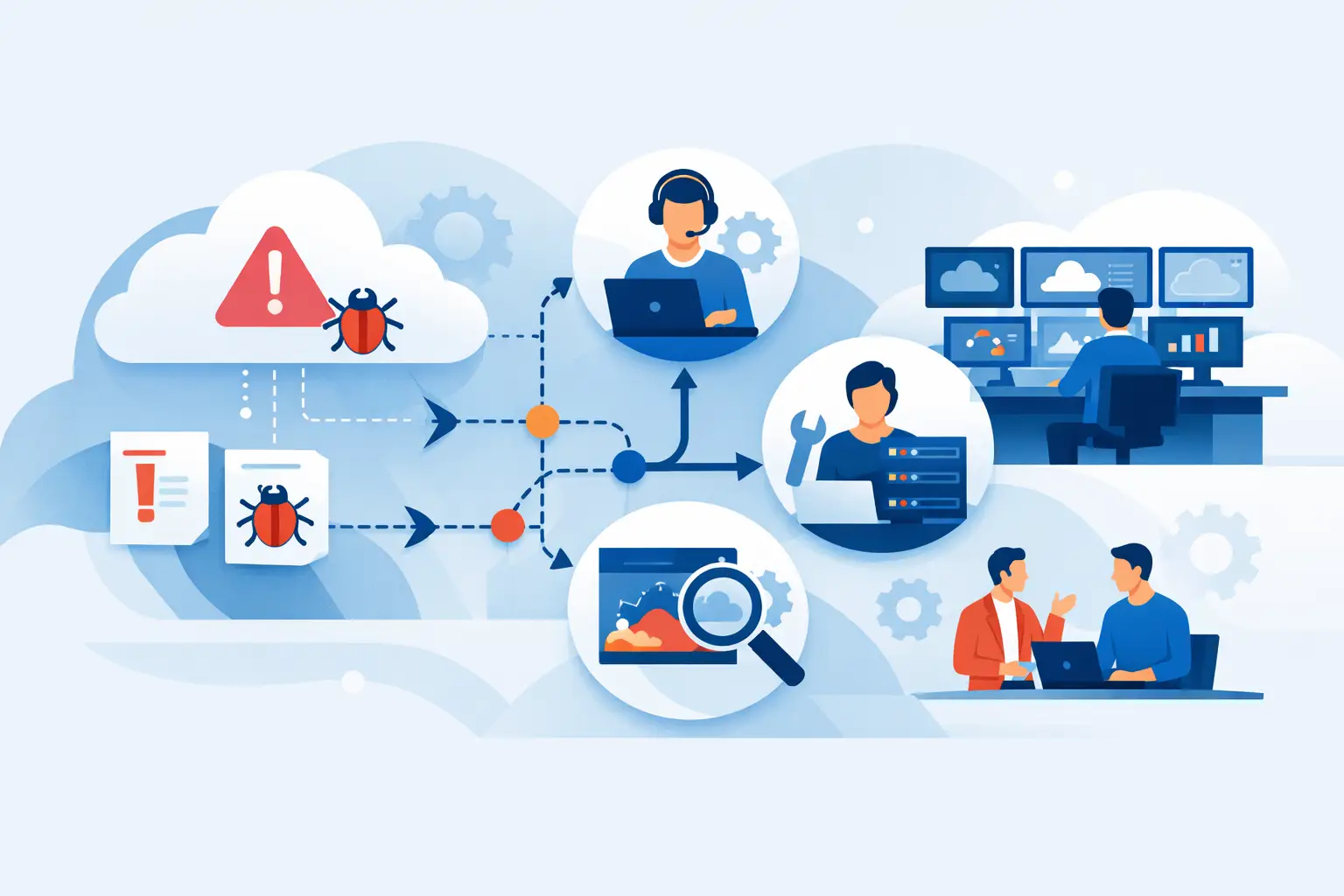
When an alert fires at 2:00 a.m., the real problem is rarely the alert itself. The bigger issue is what happens next – who sees it, who owns it, and how quickly it gets to the team that can act. That is why problem routing in SAP Cloud ALM for Operations matters so much. It turns monitoring data into an operational workflow with clear accountability, instead of leaving incidents stuck between Basis, integration, application, and business support teams.
For SAP-driven organizations running cloud-centric landscapes, that distinction is not small. A monitoring setup can be technically sound and still fail operationally if routing is vague, inconsistent, or dependent on tribal knowledge. SAP Cloud ALM for Operations gives organizations a framework to detect events and manage response, but the value depends on how well routing is designed around real support models.
Why problem routing in SAP Cloud ALM for Operations matters
Most SAP operations teams do not struggle because they lack alerts. They struggle because too many alerts arrive without context, ownership, or prioritization. The result is familiar: duplicate effort, delayed escalation, and long bridges where everyone is present but nobody is clearly responsible.
Problem routing in SAP Cloud ALM for Operations helps address that gap by connecting event detection with the right resolver group. In practice, that means incidents and operational issues are directed based on system, monitoring object, alert type, business criticality, and support boundaries. Instead of a generic operations inbox becoming the default entry point for everything, routing logic reflects how the organization actually runs support.
This is especially important in hybrid SAP estates. A performance issue in an S/4HANA process may originate in application behavior, middleware latency, job failure, or an upstream non-SAP dependency. If routing rules are too broad, the wrong team owns the issue first and resolution slows down. If routing rules are too narrow, teams waste time reclassifying and reassigning tickets. The right design sits between those extremes.
What effective routing really looks like
Strong routing is not just a technical configuration exercise. It is an operating model decision. The best setups start with support ownership, escalation paths, and service expectations before anyone touches configuration.
At a practical level, effective routing usually maps alerts and problems across three layers. The first layer is event detection, where monitoring identifies failures, thresholds, or anomalies. The second layer is classification, where issues are grouped by type, impact, and likely ownership domain. The third layer is action, where the item reaches the team that can investigate or resolve it without unnecessary handoffs.
This sounds straightforward, but the complexity appears quickly. Some organizations route by managed service. Others route by business process, environment, geography, or support vendor. A global template may work for infrastructure-style alerts but fail for integration and application issues that need more granular ownership. That is why a one-size-fits-all routing model usually creates friction.
Common routing mistakes in SAP Cloud ALM operations
The first mistake is assuming monitoring design and routing design are the same thing. They are related, but they solve different problems. Monitoring asks, “What should we watch?” Routing asks, “Who should act when something happens?” Teams that skip the second question often end up with technically complete monitoring and operational confusion.
The second mistake is building routing around the org chart instead of the service model. Org charts change. Shared service arrangements change. Managed providers change. If routing depends too heavily on named individuals or temporary team structures, it becomes brittle. Routing should align to durable support functions and escalation paths.
The third mistake is over-routing. Some teams try to capture every possible scenario with highly specific rules. That can create a maintenance burden and make routing hard to understand. Good routing should be precise where ownership is clear and flexible where investigation naturally starts with a central operations team.
Another common issue is failing to distinguish between noise reduction and routing accuracy. Alert suppression, threshold tuning, and correlation help reduce alert volume. They do not automatically improve ownership. An organization can reduce noise significantly and still send the remaining alerts to the wrong team.
How to design problem routing in SAP Cloud ALM for Operations
A practical design starts with a support ownership matrix. Before defining routing logic, document which teams own which landscapes, services, interfaces, and operational scenarios. Include gray areas, because those are usually where delays happen. If multiple teams touch the same process, define who owns initial triage and who owns resolution.
Next, group alert and problem types into meaningful operational categories. For example, job and automation failures may belong to one support stream, integration errors to another, and availability or technical monitoring issues to a Basis or platform team. This categorization gives routing structure without forcing every alert into a unique path.
Then test routing against real incidents, not theoretical examples. Historical production issues are often the best design input. Review the last few months of major incidents and ask simple questions. Who received the issue first? Was that the right team? Where did reassignment happen? What information was missing at handoff? This exercise usually exposes routing gaps faster than any workshop discussion.
Finally, govern routing as part of operations, not as a one-time setup. Support models evolve after go-live. New integrations appear. Managed service scopes shift. Business-critical processes change ownership. Routing needs periodic review so it remains aligned with the live environment.
Where routing logic should be specific
Specificity adds the most value where alert types have a predictable resolver path. Integration monitoring is a good example. If interface failures consistently belong to a middleware or integration support team, route accordingly. The same is true for recurring batch job issues, specific tenant-level technical events, or alerts tied to known application areas.
Specific routing also helps where service level expectations differ. A failed payroll interface and a low-priority development-system warning should not follow the same path. If business criticality is not reflected in routing and escalation, response quality will vary widely.
Where routing logic should stay simple
Not every issue deserves a highly specialized route. Some alerts are best handled by a central operations team that performs first-line triage before escalation. This is often true for ambiguous technical symptoms, low-confidence alerts, or events in shared platforms where root cause is unclear.
Simple routing also matters during early Cloud ALM adoption. Organizations implementing SAP Cloud ALM for Operations do not need a perfect end-state model on day one. A controlled, easy-to-manage routing design with clear manual escalation is often better than an overly engineered model that nobody trusts.
The business impact of better routing
Well-designed routing improves more than incident response time. It reduces operational ambiguity. Teams spend less time negotiating ownership and more time working the issue. That leads to better mean time to acknowledge, fewer reassignments, cleaner escalation, and more useful reporting on where operational problems originate.
It also improves trust in the monitoring platform. When teams receive relevant alerts they can actually act on, adoption goes up. When they receive noise or misrouted issues, they start bypassing the process through email, chat, or informal escalation. Once that behavior sets in, operational discipline weakens quickly.
For leadership, better routing creates stronger visibility into support performance. If problem assignment reflects actual service ownership, reporting becomes more meaningful. You can see which domains generate recurring issues, which teams carry heavy alert loads, and where handoff friction is creating delay. Those insights support staffing, service improvement, and transition planning.
What experienced SAP teams should plan for
Organizations with mature SAP operations should expect some iteration. Routing improves through use. Even a well-planned design will reveal exceptions after it meets real production behavior. The goal is not to eliminate every reassignment. The goal is to make reassignment the exception rather than the normal operating model.
It also helps to treat routing as part of a broader operational adoption effort. Monitoring configuration, event interpretation, team responsibilities, runbooks, and escalation governance all influence outcomes. That is where specialist support can make a measurable difference. A focused SAP Cloud ALM partner such as CloudALMexperts can help organizations align platform capability with the reality of enterprise support structures, rather than leaving routing as an afterthought.
Problem routing in SAP Cloud ALM for Operations works best when it reflects how your organization actually resolves issues under pressure, not how the support model looks on paper. If you design for real ownership, real escalation paths, and real business impact, the platform becomes far more than a monitoring tool – it becomes a reliable part of operational control.